Movies

HomeMoviesSearchTV SeriesBookmarksView Source
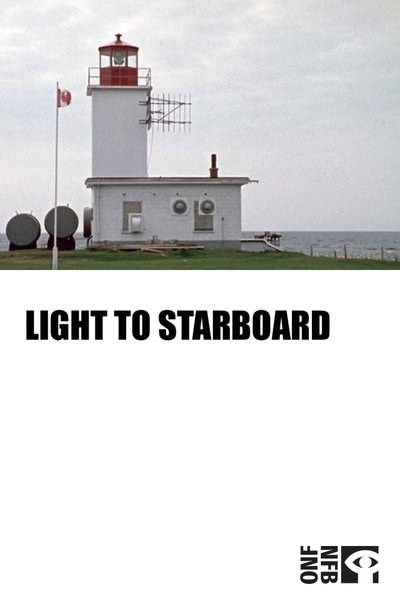
Light to Starboard
Light to Starboard

Light to Starboard

Genres

Documentary

OverView

This film presents the historical development of lighthouses in Canada, and shows the conversion from keeper-maintained lights to automated equipment.

Others

Budget

$--

Revenue

$--

Status

Released

Original Language

English

Runtime

47 mins

Rating

0/10

Release Date

01 January 1972

Country

Canada

Cast

Similar Movies

10.0

The Little Church That Could

June 2022 •English

Amidst a mostly Catholic community, a small tiny Anglican church offers more to the community of Placentia than people may think, and holds many connections and history to the rest of the world.

8.0

The Secret Order

November 2022 •French

Phil Comeau shines a spotlight on the Ordre de Jacques-Cartier, a powerful secret society that operated from 1926 to 1965, infiltrating every sector of Canadian society and forging the fate of French-language communities. Through never-before-heard testimony from former members of the Order, along with historically accurate dramatic reconstructions, this film paints a gripping portrait of the social and political struggles of Canadian francophone-minority communities.

0.0

Things That Go Bump in the Night: Tales of Haunted New England

October 2009 •English

Things That Go Bump in the Night: Tales of Haunted New England takes you on a journey throughout historic New England collecting tales of the supernatural, the unexplained, and the mysterious — spooky stories of ghosts, spirits, witches... and even a vampire!

0.0

The Eyes of Children

December 1962 •English

Christmastime at the Roman Catholic-run Kamloops Indian Residential School in British Columbia.

5.0

The Klondike Gold Rush

January 2015 •English

Renowned as the richest gold strike in North American mining history, the Klondike Gold Rush (1896-1899) set off a stampede of over 100,000 people on a colossal journey from Alaska to the gold fields of Canada's Yukon Territory. Filled with the frontier spirit, prospectors came and gave rise to what was one of the largest cities in Canada at that time - Dawson City. The boomtown, which became known as "the Paris of the North", earned the reputation as a place where lives could be revolutionized. Brought to life with excerpts from the celebrated book The Klondike Stampede - published in 1900 by Harper's Weekly correspondent Tappan Adney - and featuring interviews with award-winning author Charlotte Gray, and historians Terrence Cole and Michael Gates, The Klondike Gold Rush is an incredible story of determination, luck, fortune, and loss. In the end, it isn't all about the gold, but rather the journey to the Klondike itself.

0.0

Women in the Shadows

January 1991 •English

Filmed on location in Saskatchewan from the Qu'Appelle Valley to Hudson Bay, the documentary traces the filmmaker's quest for her Native foremothers in spite of the reluctance to speak about Native roots on the part of her relatives. The film articulates Métis women's experience with racism in both current and historical context, and examines the forces that pushed them into the shadows.

0.0

Threads That Tie Us: An Oshwal Odyssey

July 2024 •English

The Halari Oshwals are a small community dispersed around the world yet held together by a history of sacrifices. But times have changed. This globalization has led to many problems within the community, and their numbers are dwindling. An Oshwal woman from Canada worries about the preservation and survival of her heritage in the hands of generations to come. She sets out on a pilgrimage to visit Oshwal communities in Kenya, where she was born; the UK, where she lived for a while; and India, where her parents originated. She discovers a shared concern for the future of the community and its traditions in the face of globalization and geographical disconnect, and explores what this means for the younger generation and their Oshwal identity.

10.0

Lighthouse

February 2000 •Swedish

A depiction of some of the most interesting lighthouses around the world.

0.0

European Tour '73

June 2020 •English

A 15 minute documentary utilizing archival Super 8 film footage and original animation about a father fulfilling his dream of reconnecting his 5 small children to the steps of his own father when he fought for the Canadian military in WW2 through a trip to Europe in 1973.

0.0

Jacques Cartier, un Malouin au Canada

January 2021 •French

1.0

The Stand

October 2024 •English

On a misty morning in the fall of 1985, a small group of Haida people blockaded a muddy dirt road on Lyell Island, demanding the government work with Indigenous people to find a way to protect the land and the future. In a riveting new feature documentary drawn from more than a hundred hours of archival footage and audio, award-winning director Christopher Auchter (Now Is the Time) recreates the critical moment when the Haida Nation’s resolute act of vision and conscience changed the world.

5.5

The Good Canadian

September 2025 •English

The world knows the image of the good Canadian. But what if there was a dark secret behind a national identity? THE GOOD CANADIAN exposes the truth behind the idea of a True North strong and free. In this unflinching and eye-opening documentary, directors Leena Minifie and David Paperny move us through the corridors of systemic inequity, from the Indian Act to residential schools, to modern-day family separation. Fusing shocking footage with detailed interviews with experts, advocates, whistleblowers and politicians, THE GOOD CANADIAN challenges national myth-making, while offering Canadians the chance to forge a new identity from the truth.

7.5

Action : The October Crisis of 1970

September 1973 •English

A long and thoughtful look at those desperate days of October 1970, when Montréal awaited the outcome of FLQ terrorist acts. This film puts the October Crisis in the long perspective of history. Compiled from news and other films, it shows independence movements past and present, and their leaders; it reflects the mingled relief, dismay, defiance, when the Canadian army came to Montréal; and it shows how political leaders viewed the intervention.

0.0

1910: The Uncovering

Invalid date •English

For many years the only transportation link across Canada was one railway line. This tenuous, nation-building ribbon of steel was built through high, snowy, and unpredictable mountains. The tragic avalanche that occurred at the Rogers Pass summit in March of 1910 remains Canada's deadliest. 58 railway workers, majority Japanese died while attempting to clear a snow slide from the tracks when another larger avalanche struck from the other side in the middle of the dark night. This documentary project also delves into the lives of two unlikely friends today, a downtown Vancouver businessman, and a Japanese-born ski guide brought together by their need for purpose, healing, and a shared passion for researching the mysteries and injustices of this event. During production, the team was surprised with a visit by a 1910 victim’s great grandson from Tokyo.

5.5

Being Canadian

September 2015 •English

What does it actually mean to be Canadian? This humorous documentary, featuring interviews with a who's-who of famous Canadians, hopes to find the answer.

0.0

Girt by Sea

February 2014 •English

Girt By Sea is a cinematic love letter to the coastline of Australia - a poetic celebration of our connection to the sea as documented through archival footage over the past 100 years.

7.5

We Were Children

March 2012 •English

For over 130 years till 1996, more than 100,000 of Canada's First Nations children were legally required to attend government-funded schools run by various Christian faiths. There were 80 of these 'residential schools' across the country. Most children were sent to faraway schools that separated them from their families and traditional land. These children endured brutality, physical hardship, mental degradation, and the complete erasure of their culture. The schools were part of a wider program of assimilation designed to integrate the native population into 'Canadian society.' These schools were established with the express purpose 'To kill the Indian in the child.' Told through their own voices, 'We Were Children' is the shocking true story of two such children: Glen Anaquod and Lyna Hart.

0.0

de Luz

August 2022 •English

Filmed during lockdown 2020, ‘de Luz/Of Light’ explores fleeting perceptions and cyclic rituals of Portuguese coastal landscapes, specifically surrounding the Cabo Sardão Lighthouse in Beja, and constructs a complex audio-visual narrative through collaging together various natural rhythms (such as the sun and motion of the sea). This film is intended for screening with a 16:27 aspect ratio. The soundtrack was composed by sound artist Michelle Lewis-King.

8.0

The Invisible Nation

January 2007 •French

The Algonquin once lived in harmony with the vast territory they occupied. This balance was upset when the Europeans arrived in the 16th century. Gradually, their Aboriginal traditions were undermined and their natural resources plundered. Today, barely 9,000 Algonquin are left. They live in about 10 communities, often enduring abject poverty and human rights abuses. These Aboriginal people are suffering the threat to their very existence in silence. Richard Desjardins and Robert Monderie have decided to sound the alarm before it's too late.

6.1

Cassis

January 1966 •English

Filmed during a visit to Jerome Hill in Provence, Jonas Mekas sets his Bolex to capture a single day overlooking the port of Cassis. Shot frame by frame from morning to sunset, the film distills shifting light and color into a quiet meditation on time, place, and perception.