Movies

HomeMoviesSearchTV SeriesBookmarksView Source
Path of the Plume

Path of the Plume

Genres

Documentary

OverView

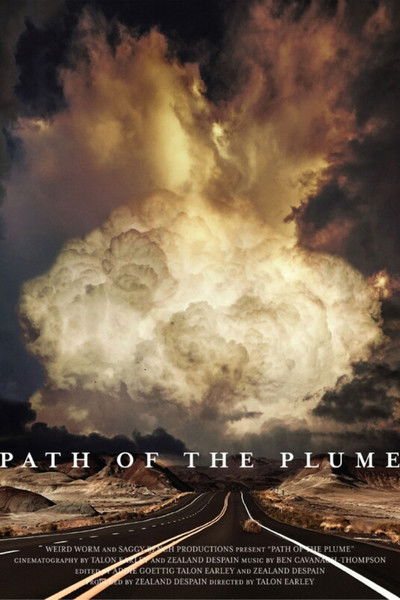
Nuclear weapons are instruments of mass destruction that exact a devastating toll on human life. In the heart of rural Utah, the Lovell family recounts the harrowing tale of nuclear testing’s shadowy legacy and impact on innocent civilians

Others

Budget

$--

Revenue

$--

Status

Released

Original Language

English

Runtime

19 mins

Rating

0/10

Release Date

18 April 2025

Country

Cast

Similar Movies

0.0

Ways of Knowing: A Navajo Nuclear History

March 2025 •English

The American Southwest holds a dark legacy as the place where nuclear weapons were invented and built. Navajo people have long held this place sacred, and continue to fight for a future that transcends historical trauma. This is their story.

0.0

Public Shelter Organization and Staff

February 1963 •English

Created in 1963 at the height of the Cold War, this Civil Defense training film uses a dramatic premise to show how emergency staff should manage and organize a large public fallout shelter during a crisis. A Shelter Manager is shown immediately taking control of the situation in the shelter, speaking calmly to those who have made it into the facility, closing the door promptly once the shelter is full, and sticking to the "shelter plan" as the situation unfolds. Some of the areas discussed in this nuclear war drama are the safety plan, regular inspections, supervised public entry into shelters, ventilation, first aid, sanitation, fire prevention, decontamination of personnel, and more. "Shelter living is different," the Manager states, "But we have a trained staff that will make your stay in this shelter livable for us all."

6.4

Nuclear Savage: The Islands of Secret Project 4.1

November 2011 •English

A shocking political exposé, and an intimate ethnographic portrait of Pacific Islanders struggling for survival, dignity, and justice after decades of top-secret human radiation experiments conducted on them by the U.S. government.

6.2

Waste: The Nuclear Nightmare

October 2009 •French

The documentary presents the results of research on nuclear waste management in the U.S., Russia, Germany and France. The authors Eric Noualhat Guéret and Laure were accompanied by the independent French laboratory technicians radiation control, CRIIRAD. They have detected and measured radiation in many places like the U.S. Columbia River or the French plutonium factory called reprocessing plant at La Hague.

3.8

Nuclear Rescue 911: Broken Arrows & Incidents

January 2001 •English

Since 1950, there have been 32 nuclear weapon accidents, known as "Broken Arrows." A Broken Arrow is defined as an unexpected event involving nuclear weapons that result in the accidental launching, firing, detonating, theft or loss of the weapon. To date, six nuclear weapons have been lost and never recovered.Now, recently declassified documents reveal the history and secrecy surrounding the events known as "Broken Arrows". There have been 32 nuclear weapon accidents since 1950. Six of these nuclear weapons have been lost and never recovered. What does this say about our defense system? What does this mean to our threatened environment? What do we do to rectify these monumental "mistakes"? Using spectacular special effects, newly uncovered and recently declassified footage, filmmaker Peter Kuran explores the accidents, incidents and exercises in the secret world of nuclear weapons.

6.0

We Are the Guinea Pigs

April 1980 •English

Farmers and parents of young children, who live in the Harrisburg, Pa., area, discuss their fears of radioactive contamination from the Three Mile Island nuclear reactor accident in 1979. Scientists and physicians also expound on the lethal dangers of nuclear power and the risks in containment processes.

0.0

Atomic: History Of The A-Bomb

January 2019 •English

The smallest of sparks can lead to the largest of explosions. Such is the case of the Atomic Bomb and the minds who have conceived of the deadliest force the world has ever known. This new documentary Atomic: The History of the A-Bomb follows this weapon of mass destruction from inception to detonation.

0.0

Hidden Exposure: The Truth About the H-Bomb Tests

October 2014 •English

In 1954, the United States tested 6 hydrogen bombs on Bikini Atoll in the Pacific Ocean. Numerous Japanese fishing boats were operating in surrounding waters, and their crews were exposed to radioactive fallout. But the Japanese government has acknowledged the cases of just 23 crewmembers. Now, scientists from Hiroshima have shed light on facts that had been buried for 60 years.

0.0

The First Secret City

November 2015 •English

Before the creation of the secret cities of Los Alamos, Oak Ridge and Hanford, the Manhattan Project hired the Mallinckrodt Chemical Works of St. Louis to refine the first uranium used in the atomic bomb dropped on Hiroshima. For the next two decades, Mallinckrodt continued its classified work for the Atomic Energy Commission during the Cold War. The resulting radioactive waste contaminated numerous locations in the St. Louis area some of which have not been cleaned up 70 years after the end of World War II. Told through the eyes of an overexposed worker, the story expands through a series of interviews that careen down a toxic pathway leading to a fiery terminus at a smoldering, radioactively-contaminated landfill. The First Secret City reveals a forgotten history and its continuing impact on the community in the 21st Century, uncovering past wrongdoing and documenting the renewed struggles to confront the issue.

7.3

Chernobyl: The Lost Tapes

February 2022 •English

Thirty-six years after the Chernobyl nuclear reactor exploded in Soviet Ukraine, newly uncovered archival footage and recorded interviews with those who were present paint an emotional and gripping portrait of the extent and gravity of the disaster and the lengths to which the Soviet government went to cover up the incident, including the soldiers sent in to “liquidate” the damage. Chernobyl: The Lost Tapes is the full, unvarnished true story of what happened in one of the least understood tragedies of the twentieth century.

0.0

Mururoa 1973

October 1973 •English

In 1973 Alister Barry joined the crew of a protest boat (The Fri) to Mururoa Atoll, where the French Government were testing nuclear weapons. Barry records the assembly of the crew, the long journey from Northland, and their reception in the test zone; when The Fri was boarded and impounded by French military he had to hide his camera in a barrel of oranges.

0.0

Backs to the Blast: An Australian Nuclear Story

June 1981 •English

A document of Australia's nuclear industrial history, from uranium mining and its toxic legacy to the nuclear weapons tests conducted at Maralinga in South Australia.

8.2

Atomic People

June 2024 •Japanese

Combining personal accounts with archive footage, this film features the voices of some of the only people left on earth to have survived a nuclear bomb.

8.0

Rainbow Warrior

September 2022 •English

The Rainbow Warrior was a Greenpeace ship that was bombed by operatives of the French government, in New Zealand in 1985, while heading to a protest against nuclear testing, tragically taking the life of photographer Fernando Pereira. Edward McGurn’s enlightening and exciting documentary uncovers a tangled tale of nuclear weapons, geopolitical coverups, and attempts to take action against impending environmental collapse. Was Pereira’s death an accident or part of a larger political plot?

0.0

Seabrook 1977

January 1978 •English

In April 1977, the small coastal town of Seabrook, New Hampshire became an international symbol in the battle over atomic energy. Concerned about the dangers of potential radioactive accidents, over 2,000 members of the Clamshell Alliance, a coalition of environmental groups, attempted to block construction of a nuclear power plant. 1,414 people were arrested in that civil disobedience protest and jailed en masse in National Guard armories for two weeks.

7.5

NUKED

October 2023 •English

The US detonated 67 nuclear weapons over the Bikini Atoll in the Marshall Islands during the Cold War, the consequences of which still reverberate down four generations to today. "NUKED," is a timely new feature documentary focussing on the human victims of the nuclear arms race, tracing the displaced Bikinian's ongoing struggle for justice and survival even as climate change poses a new existential threat. Using carefully restored archival footage to resurrect contemporaneous islanders’ voices and juxtaposing these with the full, awesome fury of the nuclear detonations, NUKED starkly contrasts the official record with the lived experience of the Bikinians themselves, serving as an important counterpoint to this summer’s Oppenheimer.

4.8

Containment

September 2015 •English

Every nuclear weapon made, every watt of electricity produced from a nuclear power plant leaves a trail of nuclear waste that will last for the next four hundred generations. We face the problem of how to warn the far distant future of the nuclear waste we have buried --but how to do it? How to imagine the far-distant threats to the sites, what kinds of monuments can be built, could stories or legends safeguard our descendants? Filmed at the only American nuclear burial ground, at a nuclear weapons complex and in Fukushima, the film grapples with the ways people are dealing with the present problem and imagining the future. Part observational essay, part graphic novel, this documentary explores the idea that over millennia, nothing stays put.

10.0

The Sorcerer's Apprentice

January 1996 •French

60 years ago, in the Algerian desert, an atomic bomb, equivalent to three or even four times Hiroshima, exploded. Named the “Blue Gerboise”, it was the first atomic bomb tested by France, and of hitherto unrivaled power. This 70 kiloton plutonium bomb was launched in the early morning, in the Reggane region, in southern Algeria, during the French colonial era. If this test allowed France to become the 4th nuclear power in the world, it had catastrophic repercussions. France had, at the time, certified that the radiation was well below the standard safety threshold. However, in 2013, declassified files revealed that the level of radioactivity had been much higher than announced, and had been recorded from West Africa to the south of Spain.

6.0

Silent Storm

September 2004 •English

From 1957 to 1978, scientists secretly removed bone samples from over 21,000 dead Australians as they searched for evidence of the deadly poison, Strontium 90 - a by-product of nuclear testing. Silent Storm reveals the story behind this astonishing case of officially sanctioned "body-snatching". Set against a backdrop of the Cold War, the saga follows celebrated scientist, Hedley Marston, as he attempts to blow the whistle on radioactive contamination and challenge official claims that British atomic tests posed no threat to the Australian people. Marston's findings are not only disputed, he is targeted as "a scientist of counter-espionage interest". Now, questions are being raised about the health repercussions for generations of Australians.

7.0

Nuclear Now

April 2023 •English

With unprecedented access to the nuclear industry in France, Russia, and the United States, Nuclear Now explores the possibility for the global community to overcome the challenges of climate change and energy poverty to reach a brighter future through the power of nuclear energy. Beneath our feet, Uranium atoms in the Earth’s crust hold incredibly concentrated energy. Science unlocked this energy in the mid-20th century, first for bombs and then to power submarines. The United States led the effort to generate electricity from this new source. Yet in the mid-20th century as societies began the transition to nuclear power and away from fossil fuels, a long-term PR campaign to scare the public began, funded in part by coal and oil interests.