Movies

HomeMoviesSearchTV SeriesBookmarksView Source
The Three Teas in Algeria

The Three Teas in Algeria

Genres

DocumentaryAdventure

OverView

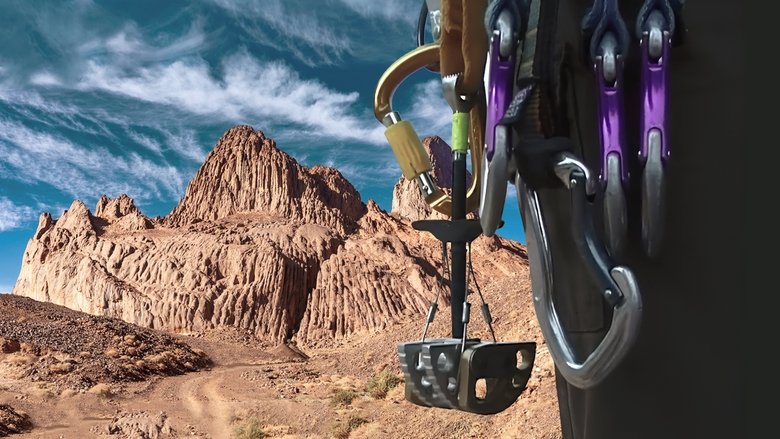
Thierry Damilano and his team of Tuareg guides will take you on a trek in the Algerian Sahara, to discover the local culture with a mandatory visit to the hermitage of Father de Foucauld facing Assekrem, then climbing the legendary peaks of the Hoggar massif.

Others

Budget

$--

Revenue

$--

Status

Released

Original Language

French

Runtime

27 mins

Rating

10/10

Release Date

01 January 2004

Country

France

Cast

Similar Movies

10.0

Le Grand Désert

December 1950 •French

In 1950, the explorer Roger Frison-Roche made a crossing of more than a thousand kilometers on the back of a camel with the photographer Georges Tairraz II, in the heart of the Sahara, from Hoggar then Djanet in Algeria to Ghat in Libya. From their journey they brought back a large number of color films and documents. Among thousands of photos, they selected 47 images which reflect the various aspects of these immense spaces which occupy a third of Africa in the book "The Great Desert". “The Great Desert, 1000 kilometers on camelback” is the eponymous 85-minute documentary of this epic, released in 1950.

5.9

Sahara

April 2005 •English

Seasoned adventurer and treasure hunter Dirk Pitt, a former Navy SEAL, sets out for the African desert with his wisecracking buddy Al in search of a confederate ironclad battleship rumored to have vanished long ago, the main draw being the treasure supposedly hidden within the lost vessel. When the daring duo come across Dr. Eva Rojas, a beautiful scientist who is juggling an escape from a warlord and a mission to stop the spread of a powerful plague, their desert expedition begins to heat up.

8.5

Algeria in Flames

January 1958 •Arabic

These are the first images shot in the ALN maquis, camera in hand, at the end of 1956 and in 1957. These war images taken in the Aurès-Nementchas are intended to be the basis of a dialogue between French and Algerians for peace in Algeria, by demonstrating the existence of an armed organization close to the people. Three versions of Algeria in Flames are produced: French, German and Arabic. From the end of the editing, the film circulates without any cuts throughout the world, except in France where the first screening takes place in the occupied Sorbonne in 1968. Certain images of the film have circulated and are found in films, in particular Algerian films. Because of the excitement caused by this film, he was forced to go into hiding for 25 months. After the declaration of independence, he founded the first Algerian Audiovisual Center.

7.6

The Zerda or the Songs of Forgetting

February 1983 •French

“La Zerda and the songs of oblivion” (1982) is one of only two films made by the Algerian novelist Assia Djebar, with “La Nouba des femmes du mont Chenoua” (1977). Powerful poetic essay based on archives, in which Assia Djebar – in collaboration with the poet Malek Alloula and the composer Ahmed Essyad – deconstructs the French colonial propaganda of the Pathé-Gaumont newsreels from 1912 to 1942, to reveal the signs of revolt among the subjugated North African population. Through the reassembly of these propaganda images, Djebar recovers the history of the Zerda ceremonies, suggesting that the power and mysticism of this tradition were obliterated and erased by the predatory voyeurism of the colonial gaze. This very gaze is thus subverted and a hidden tradition of resistance and struggle is revealed, against any exoticizing and orientalist temptation.

7.5

To the Limit

February 2007 •German

At the Limit is a documentary about extreme climbing. In this sports documentary, Pepe Danquart shows brothers Thomas and Alexander Huber climbing in Patagonia and on the granite rock "El Capitan" in Yosemite Valley (USA). A key part of the film is their attempt at a speed ascent of the 1,000-meter-high route "The Nose," in which the two athletes aim to break the then speed record of 2:48:30 hours, set by Hans Florine and Yuji Hirayama in September 2002.

0.0

First Ascent - Kunyang Chhish East

January 2014 •English

A story of chopped fingers, fun, friendship and the First Ascent of Kunyang Chhish East (7,400m). Following the rules of true alpine style Hansjörg Auer, Matthias Auer and Simon Anthamatten embark on an adventure for the summit and for survival on Kunyang Chhish East.

8.4

The Lord of the Rings: The Fellowship of the Ring

December 2001 •English

Young hobbit Frodo Baggins, after inheriting a mysterious ring from his uncle Bilbo, must leave his home in order to keep it from falling into the hands of its evil creator. Along the way, a fellowship is formed to protect the ringbearer and make sure that the ring arrives at its final destination: Mt. Doom, the only place where it can be destroyed.

8.4

The Lord of the Rings: The Two Towers

December 2002 •English

Frodo Baggins and the other members of the Fellowship continue on their sacred quest to destroy the One Ring--but on separate paths. Their destinies lie at two towers--Orthanc Tower in Isengard, where the corrupt wizard Saruman awaits, and Sauron's fortress at Barad-dur, deep within the dark lands of Mordor. Frodo and Sam are trekking to Mordor to destroy the One Ring of Power while Gimli, Legolas and Aragorn search for the orc-captured Merry and Pippin. All along, nefarious wizard Saruman awaits the Fellowship members at the Orthanc Tower in Isengard.

8.5

The Lord of the Rings: The Return of the King

December 2003 •English

As armies mass for a final battle that will decide the fate of the world--and powerful, ancient forces of Light and Dark compete to determine the outcome--one member of the Fellowship of the Ring is revealed as the noble heir to the throne of the Kings of Men. Yet, the sole hope for triumph over evil lies with a brave hobbit, Frodo, who, accompanied by his loyal friend Sam and the hideous, wretched Gollum, ventures deep into the very dark heart of Mordor on his seemingly impossible quest to destroy the Ring of Power.​

10.0

Cervin 1865, une première tragique

March 2015 •German

The first ascent of the Matterhorn was made on July 14, 1865 by Edward Whymper, Francis Douglas, Charles Hudson, Douglas Hadow, Michel Croz and two guides from Zermatt, Peter Taugwalder father and son. Douglas, Hudson, Hadow and Croz are killed on the descent after Hadow slips and drags the other three men down the north face. Whymper and the two Taugwalders, who survive, are later accused of having cut the rope that connected them to the rest of the group so as not to be dragged into the fall, but the ensuing investigation finds no evidence of their guilt and they are acquitted. The Matterhorn is the last great peak in the Alps to be conquered and its ascent marks the end of the golden age of mountaineering. One hundred and fifty years later, a team undertakes the same expedition in order to unravel the mystery.

10.0

The Desert Rocker

November 2022 •French

The Desert Rocker is an intimate, witty and profound portrait of the extraordinary Hasna El Becharia, a pioneer Gnawa artist. The first musician to break through the social barrier of this culture, she empowers and inspires women of all ages by reclaiming a musical tradition reserved for men for centuries . A singularly talented artist, she leads women to redefine their roles and challenge cultural norms , one musical performance at a time.

6.6

Stars at Noon

January 1959 •French

Les Etoiles de Midi is an engaging docudrama about some of the more spectacular exploits of French mountain climbers over the last several decades. In one re-enacted story, there is a wartime escape through the mountains, and in another, a daring rescue of a pair of climbers who had been missing. The actors themselves are adept at the sport of climbing, and they give the scenes an immediacy and real daring that brings the stories alive. A combination of their acrobatics and skill and the outstanding episodes in the history of French climbing creates a winning 78 minutes.

0.0

In the Shadow of Karakorum

August 1955 •German

In 1954, a German-Austrian expedition led by Mathias Rebitsch set off for the difficult-to-access Karakoram Mountains, geographically north of the Himalayas. They come across the Hunza, a people who live in the valley of the same name and believe they are descended from the soldiers of Alexander the Great. The documentary conveys impressions of the poor life of the Hunza people, the harvest, a court hearing, festivals and the children's everyday school life. Finally, the expedition sets off again and sets up its main camp on the moraine ridge of a glacier, where they measure the glacier and the earth's magnetic field. Finally, some men from the research community set off for a sub-peak of Batura.

10.0

Nanda Devi

January 1975 •French

In 1975, Raymond Renaud, Yves Pollet-Villard, Maurice Gicquel, Maurice Cretton, Jean Coudray, Yvon Masino, Walter Cecchinel, all teacher guides at ENSA in Chamonix, with the help of the Indian Mountaineering Foundation, set out to cross the 2 peaks of the highest mountain in India. After 43 hours in a truck, 10 days of slow and difficult approach walking, helped by goats for the portage due to lack of sherpas, the base camp is set up on the Nanda Devi glacier. Two groups share the two eastern and western slopes, 3 kilometers separate them: the goal being to meet between the two summits by the ridge. But on the big day, with the monsoon, bad weather arrives with wind and snow, we will have to give up. Like the French expedition of 1951 which lost two mountaineers, Roger Duplat and Gilbert Vigne, to whom Paul Gendre and Louis Dubosc pay tribute.

10.0

Paragot-Bérardini, La Cordée des Voyous

January 1997 •French

Paragot and Bérardini: two climbers who fill all climbing enthusiasts with admiration. In Fontainebleau, Saussois, the Alps, the Andes, the Himalayas, and all over the world, they have left their names attached to the most difficult routes and the most prestigious peaks. Here, they recount only the climbs they completed together: famous expeditions to Aconcagua and Huascarán, firsts in the Alps and the Dolomites. An unwavering friendship, comical and tragic adventures—this is what they share with us in the warm atmosphere of their memories. "La Cordée des Voyous" will be included in Jean Afanassieff's film "La Grande Cordée," which deals with post-war proletarian mountaineering.

7.5

To The Limit

April 1989 •English

This documentary follows world-class athletes as they perform spectacular, eye-opening feats. Experience a rock climber scale a near impossible cliff, an Olympic skier take to the mountains, and a prima ballerina make a dance that uses every single muscle look effortless.

10.0

Pierre Mazeaud, La Vie En Face(s)

January 2013 •French

Pierre Mazeau has managed to unite three of his passions which seem to have nothing in common, at a very high level: mountaineering, jurisprudence and policy. The Everest mountaineer, rescued from the Freney Pillar, the passionate jurist, the former sports minister, privy counsellor, and president of the French Constitutional Court is a charismatic personality. This sensitive film portrait follows a line, which Pierre Mazeaud himself has quoted: “Alpinism belongs to those who provide themselves with means to reach their goals, to those who are fully committed to a goal, to those, who know the value of solidarity of men, and to those who are aware that true human existence can only be fulfilled by proceeding with a team of roped-partners.”

10.0

Sentinel - The West Face

January 1967 •English

1967: Two of the world's best climbers, Yvon Chouinard and Royal Robbins, tackle the west face of Sentinel Rock, an iconic 2,100-meter granite peak located in Yosemite National Park, considered one of the most difficult in the world. The film's atmosphere is immersive, driven by a sober narrative that highlights the intimate relationship between man and the wall. The technical difficulty of the route, the prolonged physical effort, and the isolation reinforce the heroic dimension of this ascent. The documentary also reveals the essential solidarity between the climbers: each progression requires rigor, inventiveness, and total trust in both the equipment and the partner. This film is considered a benchmark in the history of mountain cinema. It testifies to the pioneering spirit of the era and the evolution of climbing techniques, perfectly illustrating the transition to a more athletic and thoughtful approach to large rock faces.

10.0

Gerboise Bleue

February 2009 •French

"Gerboise bleue", the first French atomic test carried out on February 13, 1960 in the Algerian Sahara, is the starting point of France's nuclear power. These are powerful radioactive aerial shots carried out in areas belonging to the French army. Underground tests will follow, even after the independence of Algeria. From 1960 to 1978, 30,000 people were exposed in the Sahara. The French army was recognized recognized nine irradiations. No complaint against the army or the Atomic Energy Commission has resulted. Three requests for a commission of inquiry were rejected by the National Defense Commission. For the first time, the last survivors bear witness to their fight for the recognition of their illnesses, and revealed to themselves in what conditions the shootings took place. The director goes to the zero point of "Gerboise Bleue", forbidden access for 47 years by the Algerian authorities

9.0

Algeria, Special Weapons Sections

March 2025 •French

This documentary by director Claire Billet and historian Christophe Lafaye details the massive and systematic use of chemical weapons during the Algerian War. Algerian fighters and civilians, sheltering in caves, were gassed by "special weapons sections" of the French army. The gas identified on military documents is CN2D, whose widespread use forced insurgents to flee "treated" sites, at the risk of dying there. The method is reminiscent of the "enfumades" used by the French expeditionary force during the conquest of Algeria in the 19th century. Between 8,000 and 10,000 such operations are believed to have taken place on Algerian soil between 1956 and 1962. This historical aspect is little known due to the difficulty of accessing archives, many of which are still classified, raising questions about memory, historical truth, and justice.