Movies

HomeMoviesSearchTV SeriesBookmarksView Source
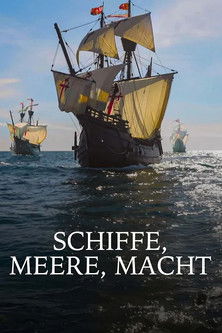
Ships, seas, power - beginning of globalization

Ships, seas, power - beginning of globalization

Genres

DocumentaryHistory

OverView

People have always wanted to reach the horizon and go beyond it. It wasn't and isn't just about discovering for the sake of discovering. Exotic goods, wealth and power were the driving forces of these people. The steamship ultimately brought the breakthrough for global mobility and trade. In the past, as now, shipping is the engine of globalization.

Others

Budget

$--

Revenue

$--

Status

Released

Original Language

German

Runtime

87 mins

Rating

0/10

Release Date

04 October 2025

Country

Germany

Cast

Gabi Hinterstoisser

Gabi Hinterstoisser

Narrator (Voice)

Similar Movies

7.4

The Last of the Mohicans

August 1992 •English

In war-torn colonial America, in the midst of a bloody battle between British, the French and Native American allies, the aristocratic daughter of a British Colonel and her party are captured by a group of Huron warriors. Fortunately, a group of three Mohican trappers comes to their rescue.

0.0

Jak se žije převozníkům podle Romana Vávry

January 1997 •Czech

0.0

ciao Aracà

September 2020 •English

"...a charming depiction of life as I knew it with my grandparents in my own village..." Clara Caleo Green, Cinema Italia UK "The sum of the individual fates and life choices paints a picture, the validity of which extends far beyond this village." Joachim Manzin, Black Box This documentary records the thoughtful and emotional confrontation with time, change, loss and hope related by the members of a small community in the idyllic Ligurian countryside who are dealing with a rapidly changing agricultural industry, transformed by globalisation and technological advances and an increasing number of foreigners buying the empty houses in their village. Forgoing the use of music and voice over, the film lets Aracà's inhabitants tell their own stories and allows the audience to dive into the rich soundscape of the ligurian alpine countryside.

7.0

Rabbit-Proof Fence

February 2002 •English

In 1931, three Aboriginal girls escape after being plucked from their homes to be trained as domestic staff, and set off on a trek across the Outback.

9.0

The Rumba Kings

May 2021 •English

In the fifties, when the future Democratic Republic of Congo was still a Belgian colony, an entire generation of musicians fused traditional African tunes with Afro-Cuban music to create the electrifying Congolese rumba, a style that conquered the entire continent thanks to an infectious rhythm, captivating guitar sounds and smooth vocals.

7.0

Under the Cloud

August 2023 •English

An investigation into the unfolding history of nuclear testing, uranium mining, and nuclear waste disposal on indigenous lands in the US. It raises the voices of those who witnessed and experienced the consequences of nuclear colonialism and those who still resist.

8.0

De l'eau dans le gasoil

January 2014 •French

7.0

Von Schlagrahmdampfern und anderen verlorenen Dingen

November 2020 •German

Not everyone who nowadays drives on the A73 between Nuremberg and Bamberg knows that they are travelling on a former waterway. Still half a century ago, the old Ludwig-Main-Danube-Canal (in short: Ludwig-Canal) was located here, which represented the last puzzle piece to a navigable connection between the oceans. Build within a remarkable ten years’ time of construction, the canal, which was opened in 1846, was the realization of a small dream of humanity as it finally connected the North Sea with the Black Sea. Unfortunately, the idea could not support itself financially: Too powerful were the railroads, which saw its rise simultaneously, and which soon undermined the ambitious canal project’s future as they were in every regard the faster, more comfortable, and better means of transportation of the hour.

7.0

The Moroccan Labyrinth

November 2007 •Spanish

0.0

OVERHEIGHT MUST TURN

May 2018 •English

For the past ten years, Jürgen Henn has filmed over-height trucks crashing into the 11foot8 train bridge affectionately nicknamed the "Can Opener." In that time, millions have viewed the crashes online. Regional, national, and international news organizations have dined out on the story and the goofy crash reels. But why do motorists continue to crash despite the many warnings, sensors, and signs? And what is it about these crashes that holds our attention? In this piece, we look for the humanity in human error.

5.6

Big Rig

March 2007 •English

Big Rig (2008) is a documentary film by Doug Pray about long-haul truck drivers. The film consists of a series of interviews with different drivers, focusing on both their personal life stories and also the life and culture of truck drivers in the United States.

6.6

The Trader

January 2018 •Georgian

A traveling trader provides a window into rural life in the Republic of Georgia, where potatoes are currency and ambition is crushed by poverty.

10.0

Gerboise Bleue

February 2009 •French

"Gerboise bleue", the first French atomic test carried out on February 13, 1960 in the Algerian Sahara, is the starting point of France's nuclear power. These are powerful radioactive aerial shots carried out in areas belonging to the French army. Underground tests will follow, even after the independence of Algeria. From 1960 to 1978, 30,000 people were exposed in the Sahara. The French army was recognized recognized nine irradiations. No complaint against the army or the Atomic Energy Commission has resulted. Three requests for a commission of inquiry were rejected by the National Defense Commission. For the first time, the last survivors bear witness to their fight for the recognition of their illnesses, and revealed to themselves in what conditions the shootings took place. The director goes to the zero point of "Gerboise Bleue", forbidden access for 47 years by the Algerian authorities

6.8

Statues Also Die

May 1953 •French

Commissioned by the journal Présence Africaine, this short documentary examines how African art is devalued and alienated through colonial and museum contexts. Beginning with the question of why African works are confined to ethnographic displays while Greek or Egyptian art is celebrated, the film became a landmark of anti-colonial cinema and was banned in France for eight years.

0.0

The Country Upside Down

April 2009 •French

Returning to the island that her father left 50 years earlier, the filmmaker goes back in time to retrace the history of her name.

6.4

The Writer from a Country Without Bookstores

December 2019 •Spanish

The ruthless dictator Teodoro Obiang has ruled Equatorial Guinea with an iron hand since 1979. Juan Tomás Ávila Laurel is the most translated Equatoguinean writer, but he had to flee the country in 2011, after starting a hunger strike denouncing the crimes of the dictatorship. Since then, he has lived in Spain, feeling that, despite the risks, he must return and fight the monster with words.

6.1

Zulu Dawn

May 1979 •English

In 1879, the British suffer a great loss at the Battle of Isandlwana due to incompetent leadership.

0.0

Cao Bang, les soldats sacrifiés d'Indochine

April 2014 •French

6.8

The Ghost and the Darkness

October 1996 •English

Sir Robert Beaumont is behind schedule on a railroad in Africa. Enlisting noted engineer John Henry Patterson to right the ship, Beaumont expects results. Everything seems great until the crew discovers the mutilated corpse of the project's foreman, seemingly killed by a lion. After several more attacks, Patterson calls in famed hunter Charles Remington, who has finally met his match in the bloodthirsty lions.

0.0

Timuti

January 2012 •Inuktitut

In Inukjuak, an Inuit community in the Eastern Arctic, a baby boy has come into the world and they call him Timuti, a name that recurs across generations of his people, evoking other Timutis, alive and dead, who will nourish his spirit and shape his destiny.