Movies

HomeMoviesSearchTV SeriesBookmarksView Source
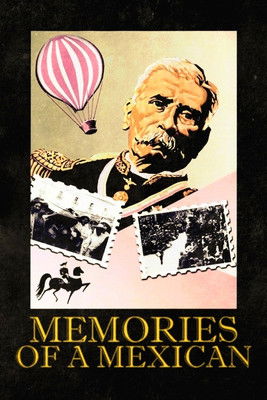
Memories of a Mexican

Memories of a Mexican

Genres

DocumentaryHistory

OverView

A history of the Mexican Revolution (1910-17), narrated through the striking images of the enormous film archive of Salvador Toscano (1872-1947), pioneer of Mexican cinema, compiled by his daughter, Carmen Toscano.

Others

Budget

$--

Revenue

$--

Status

Released

Original Language

Spanish

Runtime

103 mins

Rating

7.067/10

Release Date

24 August 1950

Country

Mexico

Cast

Carmen Toscano

Carmen Toscano

Self - Narrator (voice)

Manuel Bernal

Manuel Bernal

Salvador Toscano (voice)

Porfirio Díaz

Porfirio Díaz

Self (archive footage)

Francisco I. Madero

Francisco I. Madero

Self (archive footage)

Emiliano Zapata

Emiliano Zapata

Self (archive footage)

Venustiano Carranza

Venustiano Carranza

Self (archive footage)

Pancho Villa

Pancho Villa

Self (archive footage)

Victoriano Huerta

Victoriano Huerta

Self (archive footage)

Similar Movies

7.6

Butch Cassidy and the Sundance Kid

September 1969 •English

As the west rapidly becomes civilized, a pair of outlaws in 1890s Wyoming find themselves pursued by a posse and decide to flee to South America in hopes of evading the law.

6.4

Primary

November 1960 •English

Primary is a documentary film about the primary elections between John F. Kennedy and Hubert Humphrey in 1960. Primary is the first documentary to use light equipment in order to follow their subjects in a more intimate filmmaking style. This unconventional way of filming created a new look for documentary films where the camera’s lens was right in the middle of what ever drama was occurring. Preserved by the Academy Film Archive in partnership with The Film Foundation in 1998.

5.0

The Town

January 1944 •English

The Town was a short propaganda film produced by the Office of War Information in 1945. It presents an idealized vision of American life, shown in microcosm by Madison, Indiana. It was created primarily for exhibition abroad, to provide international audiences a more well-rounded view of America, and was therefore produced in more than 20 translations. Preserved by the Academy Film Archive in 2012.

6.8

The History in the Gaze

April 2011 •Spanish

The film portraits the stage previous to the outbreak of the Mexican Revolution, from the end of Porfirio Díaz´ government, the social volatility, the ephemeral government of Madero and the presence of the working class in the figures of Villa and Zapata, until the signing if the Constitution of 1917. All of this through moving images, filmed during those events mainly by the Alva brothers, filmmakers of that time. Those images let us perceive the contradictory and shuddered glance of the people of that period.

6.9

Viva Zapata!

February 1952 •English

The story of Mexican revolutionary Emiliano Zapata, who led a rebellion against the corrupt, oppressive dictatorship of president Porfirio Díaz in the early 20th century.

5.5

God Respects Us When We Work, But Loves Us When We Dance

October 1968 •English

Les Blank's poetic documentation of 1967's Los Angeles Easter Sunday Love-In. Preserved by the Academy Film Archive in 2002.

0.0

California's Golden Beginning

January 1948 •English

A description and enactment of the discovery of gold by James Marshall, and the role played by John Sutter. Preserved by the Academy Film Archive.

6.0

The Art Director

November 1949 •English

A film's art director is in charge of the set, from conception to construction to furnishing. This short film walks the viewer through art directors' responsibilities and the demands on their talents. They read a script carefully and design a set to capture the time and place, the social strata, and the mood. They must be scholars of the history of architecture, furnishings, and fashion. They choose the colors on a set in anticipation of the lighting and the mood. Their work also sets styles, from Art Deco in the 20's to 30s modernism. Then it's on to the next project. Preserved by the Academy Film Archive in 2012.

7.5

Patton

January 1970 •English

"Patton" tells the tale of General George S. Patton, famous tank commander of World War II. The film begins with Patton's career in North Africa and progresses through the invasion of Germany and the fall of the Third Reich. Side plots also speak of Patton's numerous faults such his temper and habit towards insubordination.

7.0

Chicken Real

January 1970 •English

One of Les Blank's industrial films, which follows a Holly Farms "broiler" chicken from factory incubation to the county fair barbecue pit. A hilarious, disturbing and surreal look at a large-scale chicken farm producing 156 million chickens a year! Film includes lots of chicken songs and music recorded live in the Blue Ridge Mountains of North Carolina. Preserved by the Academy Film Archive in 2013.

7.6

Hoop Dreams

September 1994 •English

Every school day, African-American teenagers William Gates and Arthur Agee travel 90 minutes each way from inner-city Chicago to St. Joseph High School in Westchester, Illinois, a predominately white suburban school well-known for the excellence of its basketball program. Gates and Agee dream of NBA stardom, and with the support of their close-knit families, they battle the social and physical obstacles that stand in their way. This acclaimed documentary was shot over the course of five years.

6.6

Mardi Gras Carnival

February 1898 •English

The film is part of Eye Filmmuseum’s Mutoscope and Biograph Collection. This collection consists of about 200 films preserved on their original 68 mm format. The digital file provided is scanned in 2022 at Eye Collection Center, from the 35 mm duplicate negative that was made in 1998. After the first analogue preservation round made 25 years ago, Eye is now undertaking the digital restoration of the Mutoscope & Biograph Collection. “Mardi Gras Carnival” became the focus of attention, thanks to its inclusion within ‘The Artistry of REX’ exhibition, that opened in the summer of 2022 at the Louisiana State Museum.

6.8

The Robe

September 1953 •English

Drunk and disillusioned Roman, Marcellus Gallio, wins Jesus' robe in a dice game after the crucifixion. Marcellus has never been a man of faith like his slave, Demetrius, but when Demetrius escapes with the robe, Marcellus experiences disturbing visions and feels guilty for his actions. Convinced that destroying the robe will cure him, Marcellus sets out to find Demetrius — and discovers his Christian faith along the way.

0.0

Wonderland of California

January 1933 •English

Short film made up of various clips showcasing the Cinecolor process, including a visit to a Marx Brothers film set. Preserved by the Academy Film Archive in partnership with The Film Foundation.

5.7

The Underdogs

June 1940 •Spanish

During the Mexican Revolution, the people tired of living in poverty and enduring the atrocities committed by the federals, decide to follow one of their own, General Demetrio Macias, a thief with tricks he learned in jail and who along with "La Pintada" decides to take his people to victory. Led by Captain Anastacio Montañez, the newly formed army fight and honor their code at the same time as they loot houses to spread the wealth.

0.0

City Streaming

January 1990 •English

This is a film made in Toronto, in memoriam, so to speak - a memory piece, a "piecing-together" of the experience of living there. The consciousness of the maker comes to sharply focused visual music - not to arrive at snapshots, as such, but rather to "sing" the city as remembered from daily living...complementary, then, to an earlier film, "Unconscious London Strata." Preserved by the Academy Film Archive in 2015.

0.0

Seeing Them Through

February 1945 •English

Documentary short film reporting on the activities of the American Red Cross and the useage made of contributed funds for the previous year. Preserved by the Academy Film Archive in 2012.

6.2

Mexico: The Frozen Revolution

May 1973 •Spanish

A thorough analysis of the socio-politics of Mexico, within the historical context of the Mexican Revolution reality. Includes footage from the 1910s, interviews with farmers, politicians, intellectuals, middle class, union, etc, as well as scenes from the life of an Indian family in Chiapas, their religious rituals, their crops, trials and bilingual schools. The film ends with the slaughter in the Plaza de Tlatelolco in 1968, during the infamous Olympics.

6.0

One Hand Don't Clap

August 1991 •English

Kavery Kaul’s engaging documentary traces the history of calypso and soca music from their birth in the African-East Indian traditions of Trinidad and Tobago through its worldwide diaspora, including its popularization in the 1950s by Harry Belafonte and the new independent distribution networks that arose to serve the expatriate community in the 1980s. North American restoration premiere at To Save and Project: The 19th MoMA International Festival of Film Preservation on January 27 and 31, 2023. Digital restoration by the Academy Film Archive and the Women’s Film Preservation Fund of New York Women in Film & Television; courtesy of Riverfilms.

9.0

Claymation: Three Dimensional Clay Animation

May 1978 •English

A look inside the Will Vinton Studio, with specializes in stop-motion animations with clay. Preserved by the Academy Film Archive in 2013.