Movies

HomeMoviesSearchTV SeriesBookmarksView Source
John Ford Goes to War

John Ford Goes to War

Genres

Documentary

OverView

When World War II broke out, John Ford, in his forties, commissioned in the Naval Reserve, was put in charge of the Field Photographic Unit by Bill Donavan, director of the soon-to-be-OSS. During the war, Field Photo made at least 87 documentaries, many with Ford's signature attention to heroism and loss, and many from the point of view of the fighting soldier and sailor. Talking heads discuss Ford's life and personality, the ways that the war gave him fulfillment, and the ways that his war films embodied the same values and conflicts that his Hollywood films did. Among the films profiled are "Battle of Midway," "Torpedo Squadron," "Sexual Hygiene," and "December 7."

Others

Budget

$--

Revenue

$--

Status

Released

Original Language

English

Runtime

56 mins

Rating

5.286/10

Release Date

01 January 2002

Country

United States of America
Cast

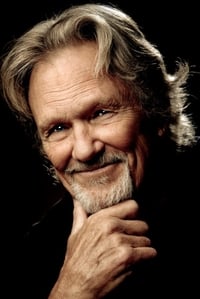
Kris Kristofferson

Kris Kristofferson

Narrator (voice)

Peter Bogdanovich

Peter Bogdanovich

Self - Interviewee

Oliver Stone

Oliver Stone

Self - Interviewee

Andrew Sarris

Andrew Sarris

Self - Interviewee

Leonard Maltin

Leonard Maltin

Self - Interviewee

F. X. Feeney

F. X. Feeney

Self - Interviewee

Similar Movies

10.0

Letters from Europe

April 2021 •Italian

"Letters from Europe" brings to light the words of men and women who gave their lives resisting the Nazi and fascist conquest from 1939 to '45 across the European continent. The moving goodbyes penned by a few of those sentenced to death are sometimes true spiritual testaments that explore the meaning of civic responsibility, human existence, fraternity, and life and death. Their words, which the film mingles with footage of the present day, can perhaps restore meaning to a humanist ideal and to the ever-changing idea of a united Europe.

0.0

Hitler's 9/11

January 2013 •English

Adolf Hitler's Nazi megalomania knew no limits. The most daring of his plans World War II involved German fighter planes crashing into Manhattan's skyscrapers as living bombs, like the Japanese kamikazes. Hitler understood the huge symbolic power of Manhattan's skyscrapers. He believed suicide bombing would have a devastating psychological impact on the American people and the U.S. war effort.

0.0

We Will Remain Faithful

October 1945 •Czech

The compilation documentary We Will Remain Faithful is a testimony to the Czechoslovak resistance during the Second World War. The film covers the period from the end of the First Czechoslovak Republic to the victorious Allied advance in 1944. Director Jiří Weiss compiled it from archival footage, his own authentic and subsequently staged war footage, and material from both Allied and enemy newsreels.

7.9

The Mauthausen Resistance

October 2021 •French

During World War II, the photographer Francisco Boix and other Spanish Republican prisoners of the Mauthausen concentration camp, where 120,000 people died, managed not only to survive their indescribable experience, but also, after the war, to reveal to the world what really happened in that hell, saving from destruction thousands of official photographs taken by the SS.

0.0

June 10, 1944

December 1961 •French

Evocation of the Oradour-sur-Glane Massacre on 10 June 1944, when 642 of its inhabitants were slaughtered by a Nazi Waffen SS company, based on a visit to Diors' Museum of the Three Wars" and archive photographs.

0.0

Quando i tedeschi non sapevano nuotare

November 2013 •Italian

6.5

Fellinopolis

June 2021 •Italian

Ferruccio Castronuovo was the only authorized eye, between 1976 and 1986, to film the brilliant Italian filmmaker Federico Fellini (1920-1993) in his personal and creative intimacy, to capture the gears of his great circus, his fantastic lies and his crazy inventions.

6.7

Kizu: The Untold Story of Unit 731

January 2004 •French

Documentary about Japan's Unit 731 of World War II.

0.0

Munich, or Peace in Our Time

September 1967 •French

September 28, 1938, war is about to break out. Tension was mounting, as Chamberlain and Daladier on one side, and Hitler and Mussolini on the other, met in Munich. This conference marked the culmination of the weakness of European democracies in the face of the rise of fascism. Through period documents and interviews, author Marcel Ophüls recounts this meeting and recreates the European climate of 1938.

7.0

Anatomy of a 'Homicide: Life on the Street'

November 1998 •English

A brief look at the history of "Homicide: Life on the Street", one of the best shows on television and its ratings history as well as some of the people on the show, as well as behind the camera. The primary focus of this PBS documentary is the "Subway" episode which aired on December 5, 1997 on NBC. This two-hour documentary follows the "Subway" episode from conception to award nominations.

7.3

Goering's Catalogue: A Collection of Art and Blood

March 2021 •French

For more than a decade, Reichsmarschall Hermann Goering, Adolf Hitler's right-hand man during the infamous Third Reich, assembled a collection of thousands of works of art that were meticulously catalogued.

0.0

Raoul Wallenberg: Buried Alive

December 1983 •English

A profile of Swedish diplomat Raoul Wallenberg, the film covers his role in saving the lives of Jewish refugees from the Holocaust, as well as exploring the evidence that he may still have been alive in a Soviet gulag as late as the early 1980s.

0.0

Dear Babe

September 1995 •English

Filmmaker Rosanne Ehrlich unearths hundreds of letters her father wrote her mother while he was away from home, fighting in WWII, and shares them in this documentary that blends narration with, archival footage.

0.0

Making 'M*A*S*H'

January 1981 •English

An in-depth look at the highly successful TV series, including a study of the philosophical approach of the program.

8.0

Un été à la Garoupe

November 2020 •French

La Garoupe, a beach in Antibes, in 1937. For one summer, the painter and photographer Man Ray films his friends Pablo Picasso, Dora Maar, Paul Eluard and his wife Nusch, as well as Lee Miller. During these few weeks, love, friendship, poetry, photography and painting are still mixed in the carefree and the creativity specific to the artistic movements of the interwar period.

7.9

Indiana Jones: The Search for the Lost Golden Age

May 2021 •French

Hawaii, May 1977. After the success of Star Wars, George Lucas and Steven Spielberg meet to find a new project to work on together, the former as producer, the latter as director. The story of how the charismatic archaeologist Indiana Jones was born and how his first adventure, released in 1981, triumphed at box offices around the world.

7.2

I Am Alfred Hitchcock

May 2021 •English

Interviews and archival footage weave together to tell the story of the Master of Suspense, one of the most influential and studied filmmakers in the history of cinema.

7.3

Erna, Helmut and the Nazis

April 2021 •German

Germany, 1929. Helmut Machemer and Erna Schwalbe fall madly in love and marry in 1932. Everything indicates that a bright future awaits them; but then, in 1933, Adolf Hitler and the Nazi Party rise to power and their lives are suddenly put in danger because of Erna's Jewish ancestry.

7.5

We Were Once Kids

June 2021 •English

In the early nineties, before the massive gentrification of many of New York's then slums, several young people from very disparate backgrounds left their broken homes and ventured onto the brutal streets of the city. United by their love of skateboarding, they formed a family and built a unique lifestyle that eventually inspired Kids, a groundbreaking and outrageous film directed by photographer Larry Clark and released in 1995.

7.5

Tony Robinson's VE Day Minute by Minute

May 2020 •English

Tony Robinson’s VE Day: Minute By Minute will take a unique look at a pivotal day in the history of the modern world, delving into the key events that made VE Day such a momentous twenty-four hours. This is the story of what happened on that most celebrated and important day, including original interviews with historians and veterans who tell their stories and share their first-hand experiences. Using unseen archive footage and stills, plus never told accounts from veterans who were there, this one-off special will chart the moment the clock struck midnight, to 24 hours later, when fighting officially stopped across Europe. Up and down the country it was dawning on people that they were waking up not with fear or anxiety, but with relief and excitement. This was a Great Britain no one had experienced for six years. A Britain at peace. At almost no notice street celebrations were being prepared and tens of thousands were flocking to London and other city centres.