Movies

HomeMoviesSearchTV SeriesBookmarksView Source
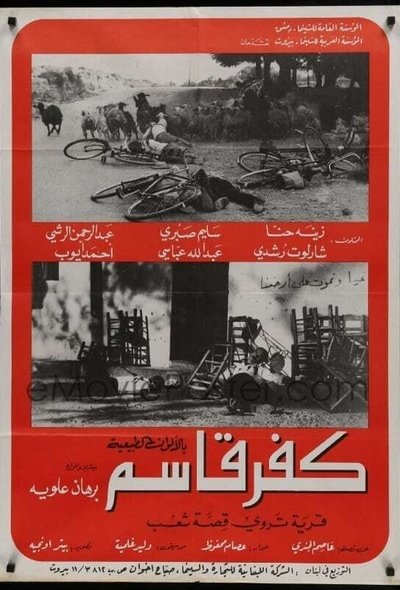
Kafr Kassem
Kafr Kassem

Kafr Kassem

Genres

Documentary

OverView

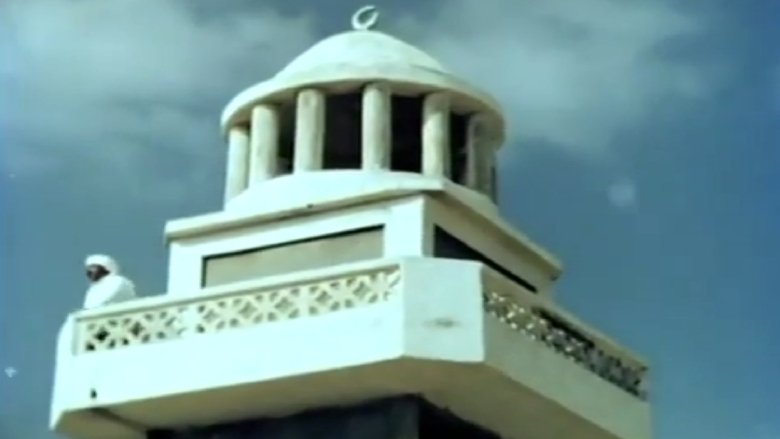
On the eve of the Israeli attack on Egypt in 1956, Israel declares martial law in all the occupied Arab territories without any previous notice. When the villagers of Kafr Kassem returned home from the fields, they were butchered and killed in what is known today as the massacre of “Kafr Kassem”.

Others

Budget

$--

Revenue

$--

Status

Released

Original Language

Arabic

Runtime

120 mins

Rating

6.2/10

Release Date

02 January 1974

Country

Syrian Arab Republic
Cast

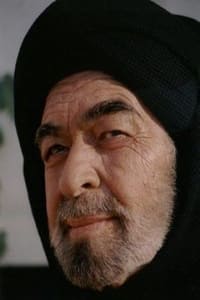
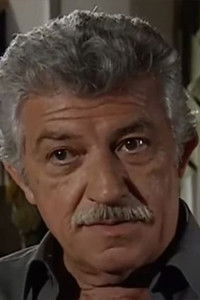
Salim Sabri

Salim Sabri

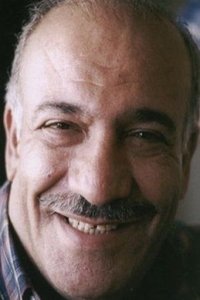
Abdul Rahman Al-Rashi

Abdul Rahman Al-Rashi

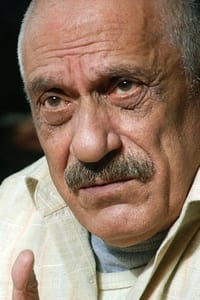
Abdallah Abbassi

Abdallah Abbassi

Ahmad Ayub

Ahmad Ayub

Esam Abjy

Esam Abjy

Abdel Hadi Al-Sabbagh

Abdel Hadi Al-Sabbagh

Similar Movies

7.7

Waltz with Bashir

June 2008 •Hebrew

An Israeli film director interviews fellow veterans of the 1982 invasion of Lebanon to reconstruct his own memories of his term of service in that conflict.

7.9

No Other Land

November 2024 •Arabic

This film made by a Palestinian-Israeli collective shows the destruction of the occupied West Bank's Masafer Yatta by Israeli soldiers and the alliance which develops between the Palestinian activist Basel and Israeli journalist Yuval.

0.0

Discordia

February 2004 •English

In the fall of 2002, it was announced that Benjamin Netanyahu would deliver a speech at Concordia University in Montreal, and reaction from the student body was swift and sudden.

9.7

And There Was Israel

March 2018 •French

The film returns to the origins of the creation of the State of Israel (from 1896 to 1948) and highlights the responsibility of the Western World.

7.4

Control Room

January 2004 •Arabic

A chronicle which provides a rare window into the international perception of the Iraq War, courtesy of Al Jazeera, the Arab world's most popular news outlet. Roundly criticized by Cabinet members and Pentagon officials for reporting with a pro-Iraqi bias, and strongly condemned for frequently airing civilian causalities as well as footage of American POWs, the station has revealed (and continues to show the world) everything about the Iraq War that the Bush administration did not want it to see.

7.5

Occupation 101: Voices of the Silenced Majority

March 2006 •English

A thought-provoking documentary on the current and historical causes of the Israeli-Palestinian conflict and U.S. political involvement.

7.5

The Decline of the Century: Testament L.Z.

February 1994 •Croatian

An epic documentary of rise and fall of Ustasha regime in Croatia.

10.0

Bil'in Habibti

January 2006 •English

The Israeli filmmaker Shai Corneli Polak records the building of the 'security wall' through Palestinian territory at the village of Bil'in. The villagers protest mostly peacefully, while the Israeli army doesn't react peacefully. By now the Israeli High Court has ruled that the building of the wall was illegal.

0.0

Gaza Calling

December 2012 •Arabic

Samer lives in Ramallah in the West Bank. His family lives in Gaza, one hour away. They have not seen each other for six years. When Mustafa went for a visit to Gaza in 2006, he was 18 years old. He was never allowed to return – his mother Hekmat has been fighting to see him again for seven years now. Two families torn apart. They share the same “crime”: being registered with a Gaza address in their Identity Cards. Under Israeli rule, they are considered “infiltrators” in their own country. Their lives have turned into a permanent struggle. Parents can only talk to their sons on the phone; sisters can only see their brothers on the internet – mothers and their children fighting to be together at last…

0.0

Relentless: Struggle for Peace in the Middle East

April 2003 •English

Relentless: The Struggle for Peace in the Middle East was produced by the pro-Israel media watchdog group HonestReporting [sic]. The concentrates on the causes of the Second Intifada through an examination of compliance the Oslo Accords, by Israel and the Palestinian Authority. It pays particular attention to the failure of the Palestinian Authority to "educate for peace". The documentary shows interviews with Itamar Marcus, director of Palestinian Media Watch, S. El-Herfi, Raanan Gissin, Caroline Glick, John Loftus, Sherri Mandel, Yariv Oppenheim, Daniel Pipes, Tashbih Sayyed and Natan Sharansky.

0.0

Hidden Scars: The Great Kanto Earthquake Korean Massacre, A Documentary

October 2005 •Japanese

In the wake of the Great Kanto Earthquake (1923), which killed nearly 100,000 people, more than 6,500 Koreans were murdered by the military, the police and civilians. This film uses evidence and testimony to examine the history behind this massacre.

10.0

Breaking Bread

February 2022 •English

In Breaking Bread, exotic cuisine and a side of politics are on the menu. Dr. Nof Atamna-Ismaeel - the first Muslim Arab to win Israel's MasterChef - is on a quest to make a social change through food. And so, she founded the A-sham Arabic Food Festival in Haifa. There, pairs of Arab and Jewish chefs collaborate on mouthwatering dishes like kishek (a Syrian yogurt soup), and qatayef (a dessert typically served during Ramadan), as we savor the taste of hope and discover the food of their region free from political and religious boundaries.

7.5

Promises

January 2001 •English

Documentarians Justine Shapiro and B.Z. Goldberg traveled to Israel to interview Palestinian and Israeli kids ages 11 to 13, assembling their views on living in a society afflicted with violence, separatism and religious and political extremism. This 2002 Oscar nominee for Best Feature Documentary culminates in an astonishing day in which two Israeli children meet Palestinian youngsters at a refugee camp.

0.0

Los Que No Sienten

November 2019 •English

First-hand testimony of the situation that the majority of the inhabitants of Palestine live through, including Tamar, a young woman who fled from there to be able to tell her story and that of her country. The short film arises from the directors' inability to create a work about a story of a country they are unfamiliar with.

0.0

Discovering Dominga: A Survivor's Story

June 2003 •English

Denese Joy Becker, a manicurist living in Iowa, discovers she is indeed Dominga Sic Ruiz, a survivor from a 1982 Guatemalan massacre, when more than 200 people were killed in the small village of Rio Negro, after opposing the construction of a dam, sponsored by World Bank. She then tries to unveil the truth.

0.0

The Hungerford Massacre

December 2004 •English

A re-enactment-documentary of the Murder-Suicide rampage by Michael Ryan, carried out on the 19th August 1987, which left 17 dead (including Ryan) and 15 injured in the town of Hungerford, Berkshire.

7.0

Put Your Soul on Your Hand and Walk

August 2025 •English

An Iranian filmmaker participates in a series of video calls with a young Palestinian photojournalist who describes her life confined in Gaza during the current regional conflict.

8.5

Louis Theroux: The Settlers

April 2025 •English

14 years after his first visit, Louis Theroux meets some of the growing community of religious-nationalist Israelis who have settled in the occupied West Bank.

9.5

Gaza: Doctors Under Attack

June 2025 •English

A forensic investigation into the impact of Israeli military operations on Gaza’s healthcare system. This urgent documentary examines evidence of widespread destruction across the territory’s medical infrastructure, where all 36 main hospitals have reportedly been damaged or destroyed. Hundreds of healthcare workers — including doctors and surgeons — are known to have been killed, injured or detained, with some alleging imprisonment and mistreatment

7.0

Gaza Ghetto

May 1985 •Swedish

Gaza Ghetto: Portrait of a Family, 1948 – 1984 is a documentary film about the life of a Palestinian family living in the Jabalia refugee camp. The film, created by Joan Mandell, Pea Holmquist, and Pierre Bjorklund in 1984 is believed to be the first documentary ever made in Gaza. The film features Ariel Sharon, Binyamin Ben-Eliezer and soldiers on patrol "candidly discuss[ing] their responsibilities." The film follows a refugee family from the Gaza Strip who visit the site of their former village, now a Jewish town in Israel. As the grandfather and great-grandfather point out an orchard and sycamore fig that belonged to Muhammed Ayyub and Uncle Khalil, an Israeli resident appears and tells them to leave, claiming they need a permit to be there. The mother tells him that, "We work in Jaffa and Tel Aviv and that's not forbidden," to which he replies, "Here it's forbidden."