Movies

HomeMoviesSearchTV SeriesBookmarksView Source
Panta Rhei
Panta Rhei

Panta Rhei

All things flow.

Genres

Documentary

OverView

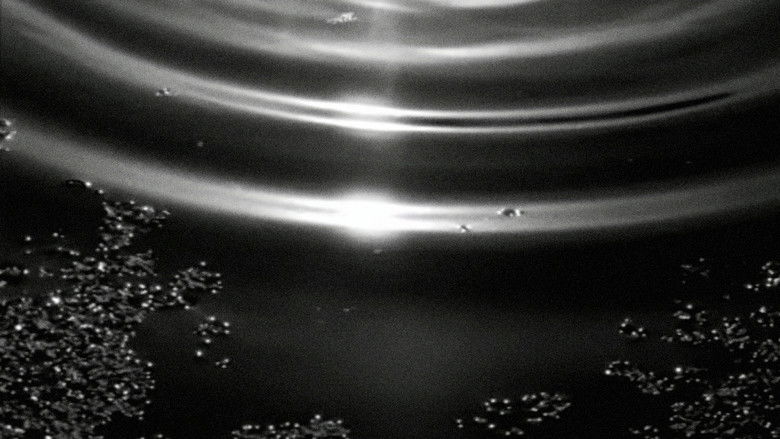
In 1952, Haanstra made Panta Rhei , another view of Holland through the eyes of a painter and filmmaker. Its poetic images of water, skies and clouds reflect Haanstra's own moods.

Others

Budget

$--

Revenue

$--

Status

Released

Original Language

English

Runtime

10 mins

Rating

6.2/10

Release Date

08 March 1952

Country

Netherlands

Cast

Similar Movies

6.0

Pick up the Wind

April 2021 •Spanish

A short film following Anthony, a young child from the small, rural town of San Antonio de los Baños, Cuba. We see him in different moments of his daily life as he interacts with different forms of environmental, familial, and social influences. While Anthony displays contradictory traits of creativity, destruction, rigidity, and tenderness as he interacts with his external and internal worlds, we see a story built from the the multidimensionality of Anthony's layered personality as a young man.

0.0

VISIONS_OF_NY

March 2019 •English

Experimental short film exploring New York City's multicultural history through the eyes of three chosen individuals.

0.0

Hunting Confessions

January 2025 •English

"This project consists a visual fluidity of construction, harmony and thoughts taking colors and length from this body of autonomy. Different images between figuration and abstraction are created by meaning and phenomenon letting the decoupage revealing a piece of a strange underworld. I built it like a window opened to the fresh air of improvisation by familiar landscapes, those exact moments articulating a connection between light and movement."

5.0

Max Ernst: Journey into the Subconscious

January 1964 •English

The inner world of the great painter Max Ernst is the subject of this film. One of the principal founders of Surrealism, Max Ernst explores the nature of materials and the emotional significance of shapes to combine with his collages and netherworld canvases. The director and Ernst together use the film creatively as a medium to explain the artist's own development.

7.5

Berlin: Symphony of a Great City

September 1927 •German

A day in the city of Berlin, which experienced an industrial boom in the 1920s, and still provides an insight into the living and working conditions at that time. Germany had just recovered a little from the worst consequences of the First World War, the great economic crisis was still a few years away and Hitler was not yet an issue at the time.

8.0

Electro-Pythagorus: A Portrait of Martin Bartlett

February 2017 •English

Electro-Pythagorus is an intimate and subjective portrait of the late Martin Bartlett, the Canadian electronic music pioneer who studied with Pauline Oliveros, David Tudor, John Cage, and Pandit Pran Nath. His contribution as an interdisciplinary composer, educator, and founding member of Western Front, though undoubtedly extensive, is in danger of being erased from cultural memory since his death from AIDS in 1993. Navigating an array of archival materials including letters, correspondences, notebooks, personal photos, and a huge body of unreleased music and field recordings held at the archives of Simon Fraser University, Electro-Pythagoras is a journey through the evolution of Bartlett’s musical time and space, softly guided by Luke Fowler’s insightful camera and montage—creating an experimental portrait that defies one-dimensionality.

7.4

Sans Soleil

March 1983 •French

A woman narrates the thoughts of a world traveler, meditations on time and memory expressed in words and images from places as far-flung as Japan, Guinea-Bissau, Iceland, and San Francisco.

6.8

À propos de Nice

May 1930 •French

What starts off as a conventional travelogue turns into a satirical portrait of the town of Nice on the French Côte d'Azur, especially its wealthy inhabitants.

0.0

Water from The Tremulous Stream

October 2021 •Spanish

A glimpse over the Diguillín River through the mechanical eye of an old digital camera. Light’s trail presents itself fortuitously over the reflection of the sun on the water, tracing infinite threads of concrete luminous information.

5.0

Heterodyne

January 1967 •English

“Geometric animation made entirely by sculptural methods: cutting, punching, welding colored leader. HETERODYNE is related to some of my other work as RNA to a protein or polypeptide. It was made in abject (if blissful) ignorance of Paul Sharits’ early work.” –Hollis Frampton

6.9

Olympia Part One: Festival of the Nations

April 1938 •German

Starting with a long and lyrical overture, evoking the origins of the Olympic Games in ancient Greece, Riefenstahl covers twenty-one athletic events in the first half of this two-part love letter to the human body and spirit, culminating with the marathon, where Jesse Owens became the first track and field athlete to win four gold medals in a single Olympics.

6.7

Olympia Part Two: Festival of Beauty

June 1938 •German

Part two of Leni Riefenstahl's monumental examination of the 1938 Olympic Games, the cameras leave the main stadium and venture into the many halls and fields deployed for such sports as fencing, polo, cycling, and the modern pentathlon, which was won by American Glenn Morris.

0.0

Wealth of a Nation

January 1964 •English

"This film explores how freedom of speech — including dissent — is afforded to all Americans, and shows freedom of expression in art, music, dance, architecture, and science. The film also emphasizes the importance of the individual’s contribution to the whole of society and demonstrates how a productive and creative society is formed by the open and respectful exchange of ideas. The film was written, produced, and directed by William Greaves" (National Archives).

0.0

Discovering Buñuel

January 2012 •English

Luis Bunuel, the father of cinematic Surrealism, made his film debut with 'Un Chien Andalou' in 1929 working closely with Salvador Dali. Considered one of the finest and controversial filmmakers with, 'L’Age d’Or' (1930), attacking the church and the middle classes. He won many awards including Best Director at Cannes for 'Los Olvidados' (1950), and the coveted Palme d’Or for 'Viridiana' (1961), which had been banned in his native Spain. His career moved to France with 'The Diary of a Chambermaid' with major stars such as Jeanne Moreau and Catherine Deneuve.

3.8

60 Seconds of Solitude in Year Zero

December 2011 •English

An anthology of one-minute films created by 51 international filmmakers on the theme of the death of cinema. Intended as an ode to 35mm, the film was screened one time only on a purpose-built 20x12 meter public cinema screen in the Port of Tallinn, Estonia, on 22 December 2011. A special projector was constructed for the event which allowed the actual filmstrip to be burnt at the same time as the film was shown.

0.0

The Parallel Coast

December 2024 •English

A story of The Map and The Territory. Shot in BC, California, and Nevada. Original music by Tashi Townley, Jack Brintnell, Luc Wiebe, and George Lee.

0.0

Tears on Yesterday's Skin

September 2024 •English

A poetic documentary in which the narrator must grapple with the grief and emotions following the death of a close friend.

0.0

The Views From Sunset Hill

February 2024 •English

A poetic documentary which explores the relationship between a person and their past, the autistic experience and the teenage sense of self.

0.0

Era Locadora

August 2017 •Portuguese

0.0

Kill Your TV: Jim Moir’s Weird World of Video Art

November 2019 •English

Jim Moir (aka Vic Reeves) explores Video Art, revealing how different generations ‘hacked’ the tools of television to pioneer new ways of creating art that can be beautiful, bewildering and wildly experimental.