Movies

HomeMoviesSearchTV SeriesBookmarksView Source
Social Genocide
Social Genocide

Social Genocide

Three decades of emptying

Genres

Documentary

OverView

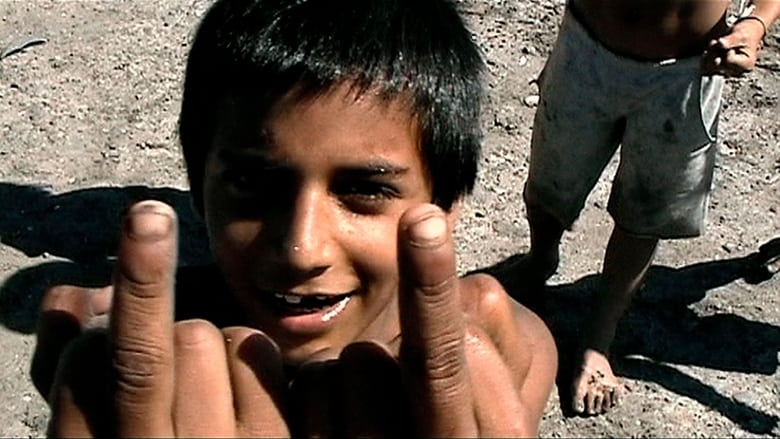
After the fall of the military dictatorship in 1983, successive democratic governments launched a series of reforms purporting to turn Argentina into the world's most liberal and prosperous economy. Less than twenty years later, the Argentinians have lost literally everything: major national companies have been sold well below value to foreign corporations; the proceeds of privatizations have been diverted into the pockets of corrupt officials; revised labour laws have taken away all rights from employees; in a country that is traditionally an important exporter of foodstuffs, malnutrition is widespread; millions of people are unemployed and sinking into poverty; and their savings have disappeared in a final banking collapse. The film highlights numerous political, financial, social and judicial aspects that mark out Argentina's road to ruin.

Others

Budget

$--

Revenue

$--

Status

Released

Original Language

Spanish

Runtime

120 mins

Rating

8/10

Release Date

18 March 2004

Country

Argentina
Cast

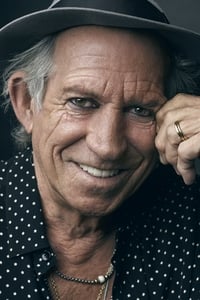
Mick Jagger

Mick Jagger

Self (archive footage)

Keith Richards

Keith Richards

Self (archive footage)

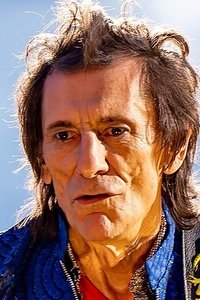
Ronnie Wood

Ronnie Wood

Self (archive footage)

Fernando E. Solanas

Fernando E. Solanas

Narrator (voice)

Carlos Saúl Menem

Carlos Saúl Menem

Self (archive footage)

Similar Movies

0.0

The New Tango

March 1973 •Spanish

The New Tango (El Nuevo Tango) was not shown in Argentina for a long time as it deals with the ascent of Argentinean president Hector Campora in May 1973, and features Cuban and Chilean presidents, Osvaldo Dorticos and Salvador Allende. A million people gathered on the Plaza de Mayo to acclaim the new President. One of Cámpora's first presidential actions was a granting of amnesty to political prisoners who where jailed during the dictatorship. On 28 May Argentina restored diplomatic relations with Cuba, which then received Argentine aid - such as food and industrial products - to break the United States embargo against Cuba.

3.5

Match 64: The Maracanã

June 2015 •English

A documentary following the day life of fans in Brazil on July 13, 2014: the day when Germany and Argentina met up in the finals of FIFA World Cup.

0.0

'78 Cup - The Power of Football

November 1979 •Portuguese

Documentary about the Football World Cup held in Argentina in 1978, focusing on the competition and behind the scenes of the most important soccer competition in the world. Two versions of the 1978 official film exist, the first "Copa 78 - O Poder do Futebol" was made by Brazilian directors Maurício Sherman and Victor di Mello in 1979 but was later withdrawn by FIFA because of its controversial content. The film includes an interview with Rodolfo Galimberti, one of the leaders of the Montoneros guerrilla group and also made accusations that the Argentinian competition organisation committee had deliberately hindered Brazilian chances of success by tampering with the pitch at Mar del Plata.

6.0

White Walls Say Nothing

May 2017 •Spanish

Buenos Aires is a complex, chaotic city. It has European style and a Latin American heart. It has oscillated between dictatorship and democracy for over a century, and its citizens have faced brutal oppression and economic disaster. Throughout all this, successive generations of activists and artists have taken to the streets of this city to express themselves through art. This has given the walls a powerful and symbolic role: they have become the city’s voice. This tradition of expression in public space, of art and activism interweaving, has made the streets of Buenos Aires into a riot of colour and communication, giving the world a lesson in how to make resistance beautiful.

7.5

Messi

September 2014 •Spanish

His teachers, coaches, childhood friends and Barça teammates, together with journalists, writers and prominent figures from the history of football, come together in a restaurant to analyze and pick apart Messi's personality both on and off the field, and to look back at some of the most significant moments in his life. Viewed from Álex de la Iglesia's unique perspective, Messi recreates the player's childhood and teenage years, from his very first steps, with a football always at his feet, through to the decision to leave Rosario for Barcelona, the separation from his family, and the role played in his career by individuals such as Ronaldinho, Rijkaard, Rexach and Guardiola.

7.1

My Enemy's Enemy

August 2007 •English

Reveals an alternate history of the post-war world. This is a version of history where, in contrast to what we are all told, fascist ideology prevailed. The story of Klaus Barbie, Nazi torturer, American spy, tool of repressive right-wing regimes, is symbolic of the real relationship that the "Western" governments had with fascism and makes us see the world as it is today - and the politicians that inhabit it - in a different way.

0.0

Argentina... Argentina...

March 2006 •Spanish

0.0

Beckham and the Battle with Argentina

April 2003 •English

With David Beckham looking uncertain for the 2002 World Cup finals after his clash with Argentinean Aldo Duscher, this documentary charts the explosive 35 year feud between their two nations, when football became war by another means.

0.0

The Golden Generation

October 2018 •Spanish

How a once-in-a-generation Argentina team, led by Manu Ginobili, brought down the “Dream Team” and won gold at the 2004 Olympic Games.

0.0

Jorge Luis Borges, the Mirror Man

June 1999 •French

The lifetime of the great Argentinian man of letters Jorge Luis Borges through narration and interviews of such key players in his life as Leonor de Acevedo —his mother—, María Kodama —his second wife—, and Adolfo Bioy Casares —his best friend and collaborator for decades.

0.0

Tango

August 1985 •German

A brief history of the emergence and artistic innovations of tango in 19th-century Argentina and Europe. The film offers a mosaic of tango melodies, art works, dance performances, historical footage, photographs of Buenos Aires at the turn of the 20th century, and texts by Celedonio Flores and Enrique Santos Discépolo.

0.0

Resistencia Cultural

April 2021 •Spanish

6.0

Debt

October 2004 •Spanish

DEBT is the story of a frantic pursuit: the search for the responsible for the televised cry of hunger of Barbara Flores, an eight-year-old Argentinean girl. Buenos Aires, Washington, the IMF, the World Bank and Davos; corruption and the international bureaucratic lack of interest.

6.0

Corporate Accountability

February 2020 •Spanish

Images of Argentinian companies and factories in the first light of day, seen from the inside of a car, while the director reads out documents in voiceover that reveals the collusion of the same concerns in the military dictatorship’s terror.

6.6

The Dread

December 2017 •Spanish

The villagers of El Dorado, Argentina, shy away from doctors. Then again, they hardly need one. They have almost as many cures for ailments and illnesses as there are residents in the village. 65 year old Jorge can also cure the most dreaded ailment of them all, the much feared espanto.

8.6

Reas

June 2024 •Spanish

Gentle or rough, blonde or shaved, cis or trans, long term inmates or those newly admitted: women re-enact their lives in a Buenos Aires prison, in trance and balance, voguing and singing. A hybrid musical and charming piece of collective empowerment.

7.0

Proyecto Faim

July 2024 •Spanish

8.0

La Arquitectura Del Crimen

April 2016 •Spanish

At the end of the last civil-military dictatorship, a camouflage operation took place in the Information Service, an office of the former Rosario Police Headquarters that operated as a clandestine detention center in the heart of the city. This architectural intervention, not recorded in the plans, obscures the survivors' accounts and hides the traces of crimes against humanity. Drawing on images, previously unpublished archives, and survivor testimonies, the documentary explores the scars of political repression and highlights the importance of preserving memorial spaces to ensure the transmission of fundamental events in our contemporary history.

5.5

Harto the Borges

September 2000 •Spanish

A fragmented biography, inconclusive, partial, of the brilliant Argentinian writer Jorge Luis Borges, based on different testimonies: his links with Leonor de Acedevo —his mother— and María Kodama —his second wife—; his vast culture and devout dedication to literature, his and that of others; his country: the politicians and the disloyal military. Borges gradually builds his own impersonation of Borges.

7.2

Witness of Another World

September 2018 •Spanish

Juan lives a solitary existence on a remote farm ever since he witnessed a UFO event. Filmmaker Alan Stivelman—together with the help of famous astrophysicist Jacques Vallée—begin an epic journey to help Juan in understanding the deep meaning of his close encounter. This true story shows the long-term consequences of close encounters, proving that no one is exempt from a potential contact.