Movies

HomeMoviesSearchTV SeriesBookmarksView Source
Tokyo Trial: Judging Japan

Tokyo Trial: Judging Japan

Genres

DocumentaryHistory

OverView

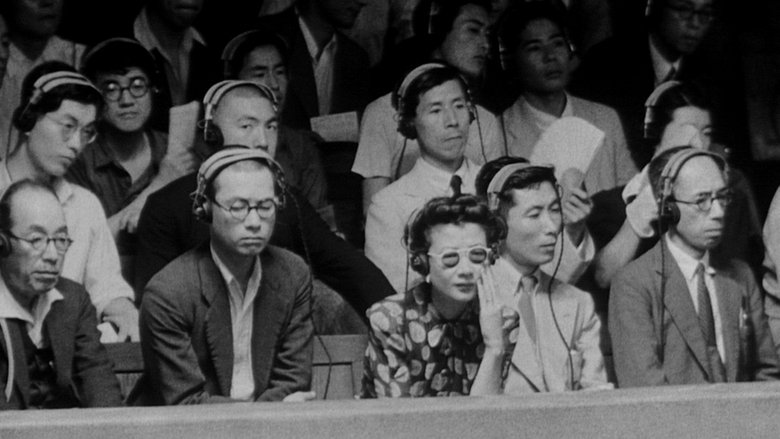
The story of the International Military Tribunal for the Far East, known as the Tokyo Trial, which, just after the Second World War, was established in Japan as a special jurisdiction in 1946 (it was closed in 1948) to judge the war crimes of the Japanese leaders; and how and why officials in Washington prevented Emperor Hirohito to be seen sat on the bench.

Others

Budget

$--

Revenue

$--

Status

Released

Original Language

French

Runtime

57 mins

Rating

8.667/10

Release Date

22 May 2016

Country

Canada
Cast

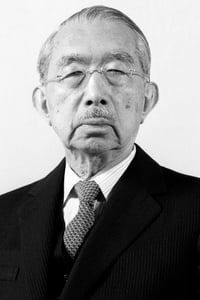
Emperor Hirohito of Japan

Emperor Hirohito of Japan

Self (archive footage)

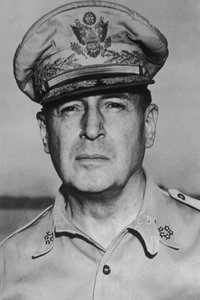
Douglas MacArthur

Douglas MacArthur

Self (archive footage)

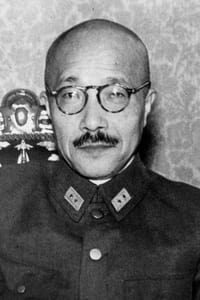
Hideki Tojo

Hideki Tojo

Self (archive footage)

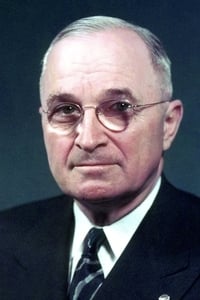
Harry S. Truman

Harry S. Truman

Self (archive footage)

Similar Movies

7.5

Occupation 101: Voices of the Silenced Majority

March 2006 •English

A thought-provoking documentary on the current and historical causes of the Israeli-Palestinian conflict and U.S. political involvement.

8.0

The Hardest Hour

February 2024 •Ukrainian

The unique testimony of the tragic events and crimes of russia through the eyes of Ukrainians, which the entire world must see and feel. Film was created from 200 hours of chronicles: survival, resistance, and life during the war. Every minute was filmed by Ukrainians with their mobile phones. Each story in the documentary is a film captured and filmed by Ukrainians on their devices.

7.4

The Windermere Children

January 2020 •English

The story of the pioneering project to rehabilitate child survivors of the Holocaust on the shores of Lake Windermere.

7.1

My Enemy's Enemy

August 2007 •English

Reveals an alternate history of the post-war world. This is a version of history where, in contrast to what we are all told, fascist ideology prevailed. The story of Klaus Barbie, Nazi torturer, American spy, tool of repressive right-wing regimes, is symbolic of the real relationship that the "Western" governments had with fascism and makes us see the world as it is today - and the politicians that inhabit it - in a different way.

0.0

In the Shadow of War

June 2014 •English

The compelling stories of four young people as they struggle to survive a war that ended nearly 20 years ago. The physical conflict is over - but its psychological impact continues. Can they break the cycle of violence?

6.1

Rail of the Star - A True Story of Children and War

October 1993 •Japanese

A young Japanese actress remembers her war childhood in Korea. Her father goes to fight, her baby sister Miko dies of typhoid, her beloved Korean maid Ohana is fired due to a mistake which could cost Chiko her life... By and by Chiko realizes that the country is being ruled by the Japanese and the Koreans are persecuted. When the war ends, the Koreans chase the Japanese rule and the roles change. Now Chiko's family is unwanted. But then the Russians come and this is the end. They have to burn all the pictures to avoid all suspicions... even Miko's picture. But when the Russians come to their house, they decide to flee over the 38th Parallel towards freedom. A group of men, women, children struggles along the mountains, led by the light of the Northern Star. Along the way they meet a Korean man, who is willing to help them to escape the Russian soldiers although his family was killed by the Japanese.

8.0

Treblinka's Last Witness

August 2012 •English

Samuel Willenberg and Kalman Taigman, the last two survivors of the Nazi extermination camp Treblinka, recount the horrors they experienced during the war and talk about their lives after their escape in a prisoner uprising in 1943. Willenberg would go on to become a hero of the 1944 Warsaw uprising while Taigman would be called as a witness during the infamous trial of Adolf Eichmann.

6.5

Andersonville

March 1996 •English

This lengthy docudrama records the harrowing conditions at the Confederacy's most notorious prisoner-of-war camp. The drama unfolds through the eyes of a company of Union soldiers captured at the Battle of Cold Harbor, VA, in June 1864, and shipped to the camp in southern Georgia. A private, Josiah Day, and his sergeant try to hold their company together in the face of squalid living conditions, inhumane punishments, and a gang of predatory fellow prisoners called the Raiders.

9.0

Algeria, Special Weapons Sections

March 2025 •French

This documentary by director Claire Billet and historian Christophe Lafaye details the massive and systematic use of chemical weapons during the Algerian War. Algerian fighters and civilians, sheltering in caves, were gassed by "special weapons sections" of the French army. The gas identified on military documents is CN2D, whose widespread use forced insurgents to flee "treated" sites, at the risk of dying there. The method is reminiscent of the "enfumades" used by the French expeditionary force during the conquest of Algeria in the 19th century. Between 8,000 and 10,000 such operations are believed to have taken place on Algerian soil between 1956 and 1962. This historical aspect is little known due to the difficulty of accessing archives, many of which are still classified, raising questions about memory, historical truth, and justice.

6.9

Walnut Tree

February 2020 •Kurdish

Qader, a bricklayer from Sardasht in Kurdistan Iran whose wife is pregnant with her 4th child, suddenly found himself amid a war crime perpetrated by the Saddam regime. On June 28th, 1987 Iraqi air fighters dropped mustard gas bombs on the city...

7.4

City of Life and Death

April 2009 •Chinese

In 1937, during the height of the Second Sino-Japanese War, the Imperial Japanese Army has just captured Nanjing, then-capital of the Republic of China. What followed was known as the Nanking Massacre, or the Rape of Nanking, a six week period wherein tens of thousands of Chinese soldiers and civilians were killed.

6.5

Sakuran

December 2006 •Japanese

Anna Tsuchiya blasts back in time playing an oiran, a top-notched geisha of the Edo period’s Yoshiwara District, navigating brothel politics while trying to cling to the man she loves.

6.4

Chronicle of the Years of Fire

November 1975 •Arabic

A meticulous chronicle of the evolution of the Algerian national movement from 1939 until the outbreak of the revolution on November 1, 1954, the film unequivocally demonstrates that the "Algerian War" is not an accident of history, but a slow process of suffering and warlike revolts, uninterrupted, from the start of colonization in 1830, until this "Red All Saints' Day" of November 1, 1954. At its center, Ahmed gradually awakens to political awareness against colonization, under the gaze of his son, a symbol of the new Algeria, and that of Miloud, half-mad haranguer, half-prophet, incarnation of Popular memory of the revolt, the liberation of Algeria and its people.

7.5

The Emperor's Naked Army Marches On

August 1987 •Japanese

Kenzo Okuzaki, a 62-year-old veteran of the New Guinea campaign in World War II, sets out to conduct interviews with survivors and relatives to find the truth behind atrocities committed while the Japanese garrison was surrounded, in particular the unexplained killing of two Japanese privates in his unit.

7.8

Land of Mine

December 2015 •Danish

In the days following the surrender of Germany in May 1945, a group of young German prisoners of war is handed over to the Danish authorities and subsequently sent to the West Coast, where they are ordered to remove the more than two million mines that the Germans had placed in the sand along the coast. With their bare hands, crawling around in the sand, the boys are forced to perform the dangerous work under the leadership of a Danish sergeant.

0.0

After the camps, being alive...

April 2010 •French

For the first time, survivors talk about life after the camps. How does one return to a life that was interrupted with such violence? How does one reconstruct oneself when all or most of one’s family were butchered? How does one resume studies and earn a living in a society that had cast you out a few years earlier?

6.5

Souvenirs of Death

June 1948 •English

This MGM John Nesbitt's Passing Parade series short tells the story of how a Mauser pistol used on the battlefield by Germans during WWII makes its way into the hands of an American gangster.

7.8

Screams Before Silence

April 2024 •English

Unpublished testimonies from freed hostages, survivors, and members of first responders regarding the attacks perpetrated on Israeli territory on October 7, 2023, by the terrorist gang Hamas reveal the repugnant extent of the crimes committed by the so-called Palestinian freedom fighters.

2.0

Salaryman

November 2021 •Japanese

Tokyo work culture's most compelling and complex protagonist; the Salaryman. A nameless, voiceless, over-worked and under-valued cog in the labour pool, expected to compromise home and social lives. Late nights and intense drinking sessions leave many of them passed out in the city streets. This slick, incisive documentary raises questions around the ethics of our global working practices in a capitalist society.

6.4

The Emperor in August

August 2015 •Japanese

In July 1945, during the end of World War II, Japan is forced to accept the Potsdam Declaration. A cabinet meeting has continued through days and nights, but a decision cannot be made. The U.S. drops atomic bombs on the cities of Hiroshima and Nagasaki, Japan. General Korechika Anami is torn over making the proper decision and the Emperor of Japan worries about his people. Prime Minister Kantaro Suzuki leads the cabinet meeting, while Chief Secretary Hisatsune Sakomizu can't do anything, but watch the meeting. At this time, Major Kenji Hatanaka and other young commissioned officers, who are against Japan surrendering, move to occupy the palace and a radio broadcasting station. The radio station is set to broadcast Emperor Hirohito reading out the Imperial Rescript on the Termination of the War.