Movies

HomeMoviesSearchTV SeriesBookmarksView Source
The Cellar Lanes of Lower Austria - Wine Culture and the Pleasures of Life

The Cellar Lanes of Lower Austria - Wine Culture and the Pleasures of Life

Wine Culture and the Pleasures of Life

Genres

Documentary

OverView

A Kellergasse – the cellar lane – is one of the distinguishing cultural and physical features of the winegrowing region Niederösterreich – Lower Austria. There are more than a thousand of them. Until recently, wine was not only stored in the Kellergasse, but pressed and fermented there as well. Today, the Kellergassen have less to do with occupation and more with recreation. A documentary by Georg Riha follows a year in the life of this valuable cultural legacy.

Others

Budget

$--

Revenue

$--

Status

Released

Original Language

German

Runtime

45 mins

Rating

0/10

Release Date

25 October 2014

Country

Austria
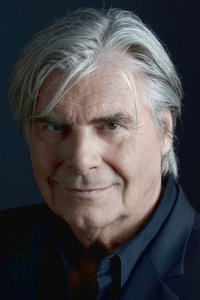
Cast

Peter Simonischek

Peter Simonischek

Erzähler (German version)

Howard Nightingall

Howard Nightingall

Narrator (English version))

Similar Movies

0.0

On the Other Side

November 2022 •French

The oldest Quebecois Benedictine convent open its gates to a documentary filmmaker for the first time. Observed up close, life behind its walls is busier than one would expect. About twenty cloistered nuns, most of them over 70, share their daily life with diligence and humor. A contemplative portrait of a community of sisterhood and solidarity emerges, punctuated by prayer, work and games evenings.

7.1

The Story of the Weeping Camel

June 2003 •Mongolian

When a Mongolian nomadic family's newest camel colt is rejected by its mother, a musician is needed for a ritual to change her mind.

6.1

In the Basement

September 2014 •German

Filmmaker Ulrich Seidl explores of the dark underside of the human psyche by entering Austrian basements fitted out as private domains for secrets and fetishes.

0.0

Oachkatzlschwoaf

Invalid date •English

Words are loaded with meaning. Certain ones conjure joyful memories and others remind us of less happy times. For Nenda Neururer, the word 'oachkatzlschwoaf' invokes a range of emotions. The German word is very hard to pronounce and is synonymous with the Austrian state of Tyrol where locals tease outsiders by asking them to pronounce it. Despite growing up in Tyrol, Nenda Neururer often felt like an outsider when confronted with this word. But when she moved to London she grew nostalgic for it and it became her little secret. Found in Translation is a series made as part of the In The Mix project, in partnership with BBC Studios TalentWorks, Black Creators Matter and the Barbican.

2.0

Muxes

November 2022 •Spanish

Highlighting the unique culture of the Zapotec people of Oaxaca, Mexico, this groundbreaking documentary chronicles the lives of those who identify as muxes, a widely recognized third gender.

0.0

After Mein Kampf?

August 1961 •English

By combining actual footage with reenactments, this film offers both a documentary and fictional account of the life of Adolf Hitler, from his childhood in Vienna, through the rise of the Third Reich, to his final act of suicide in the waning days of WWII. The film also provides considerable, and often shocking, detail of the atrocities enacted by the Nazi regime under Hitler's command.

7.2

A Year in Burgundy

January 2013 •English

This documentary follows seven wine-making families in the Burgundy region of France, delving into the cultural and creative process of making wine. You'll never look at wine the same way again.

0.0

Comitiva Esperança

January 1985 •Portuguese

8.0

Dream of the Wild Horses

June 1960 •French

The horses in Denys Colomb Daunant’s dream poem are the white beasts of the marshlands of the Camargue in South West France. Daunant was haunted by these creatures. His obsession was first visualized when he wrote the autobiographical script for Albert Lamorisse’s award-winning 1953 film White Mane. In this short the beauty of the horses is captured with a variety of film techniques and by Jacques Lasry’s beautiful electronic score.

0.0

War in Vienna

January 1989 •German

A film about news, life and death. Before the media became so prevalent, we were concerned about our immediate neighborhood. At the end of the day, news was the subject of our conversations, but now it's possible to converse with someone at the other end of the globe. We do it all the time. It's simple. The world has become one big neighborhood. Now Headline News has replaced the back fence. That's the news service of the eigthies. It's a new idea and a new approach.

0.0

Beware Haderer

January 1992 •German

A staged TV portrait of the Austrian cartoonist Gerhard Haderer; and first collaboration with Maria Hofstätter.

8.8

Over the Years

February 2015 •German

Taking the demise of a textile factory in Austria’s Waldviertel region as its starting point, with the antiquated manufacturing plant initially shown in full operation, this film poses the question of what work means for people’s self-image and character. After the factory goes bankrupt and closes, the filmmaker accompanies some of its employees as they continue to make their way, questioning them about their daily routines, the circumstances in which they live, about looking for work or the new jobs they find. One woman’s situation is precarious, but that doesn’t prevent her from bringing up her grandchildren. Another woman works here and there, flexible and resourceful. One man blossoms visibly in his newly unemployed state. Bit by bit, different aspects of their private lives and personal misfortunes emerge.

8.2

Omo Child: The River and the Bush

February 2015 •English

For many generations people in the Omo Valley (tribal southwest Ethiopia) believed some children are cursed and that these 'cursed' children bring disease, drought and death to the tribe. The curse is called 'mingi' and mingi children are killed. Lale Labuko, a young educated man from the Kara tribe was 15 years old when he saw a child in his village killed and also learned that he had 2 older sisters he never knew who had been killed. He decided one day he would stop this horrific practice. Filmed over a five year period we follow Lale's journey along with the people of his tribe as they attempt to change an ancient practice.

0.0

Essence of Healing: The Journey of American Indian Nurses

October 2017 •English

Essence of Healing is a documentary exploring the life journeys of 14 American Indian nurses - their experiences growing up, their experiences in nursing school, and their experiences on the job. They are part of a larger story - a historical line of care and compassion that has run through hundreds of indigenous tribes for thousands of years.

8.0

Christmas on the Danube

December 2013 •English

This documentary visits cities and towns and captures stunning landscapes along Europe's majestic Danube at Christmastime. Locations covered include Passau, Germany; Salzburg, Oberndorf, the Wachau Valley, and Vienna in Austria; Bratislava, Slovakia; and Budapest, Hungary. Along the way the viewer learns relevant history.

0.0

Horämäner

April 2022 •German

The horn sledges were used throughout the Alps in forestry and agriculture for material transports on steep terrain. In the Muota valley, in the heart of Switzerland, a group of idealists is continuing to preserve the old tradition of «Mänere».

0.0

HAND. LINE. COD.

September 2016 •English

In the coldest waters surrounding Newfoundland's rugged Fogo Island, "people of the fish"—traditional fishers—catch cod live by hand, one at a time, by hook and line. After a 20-year moratorium on North Atlantic cod, the stocks are returning. These fishers are leading a revolution in sustainability, taking their premium product directly to the commercial market for the first time. Travel with them from the early morning hours, spend time on the ocean, and witness the intricacies of a 500-year-old tradition that's making a comeback.

9.0

In the Time of the Count

December 2004 •Swedish

At the forests of Östergötland, where land meets sea, rests the old castle Herrborum. Here lives count Magnus Stenbock, 92, according to his own ideas about what is appropriate and what is not. Film-maker Helena Nygren is fascinated by the count and the castle, and is allowed to film on the condition that she takes the role of companion lady. Over one year, Helena returns several times to take part of count Magnus Stenbock and his servants life on castle Herrborum in Östergötland. Time stands still on the castle, and in the movie Helena wants to preserve the fairy tale feeling she gets when she steps into these ancient surroundings. The count is a strong personality with strong opinions and a great interest in history. All kinds of people come to his castle to savor the special atmosphere and follow the old fashioned rules of etiquette. Helena transforms from an observer to a lady who participates in the social games on the estate, where everything moves around its own time axis.

0.0

Song

April 2014 •Finnish

Song is a story of the last Finnish rune singer and his pupil, and the comforting power of singing.

6.4

Mondovino

November 2004 •English

Mondovino (in Italian: World of Wine) is a documentary film on the impact of globalization on the world's different wine regions written and directed by American film maker Jonathan Nossiter. It was nominated for the Palme d'Or at the 2004 Cannes Film Festival and a César Award. The film explores the impact of globalization on the various wine-producing regions, and the influence of critics like Robert Parker and consultants like Michel Rolland in defining an international style. It pits the ambitions of large, multinational wine producers, in particular Robert Mondavi, against the small, single estate wineries who have traditionally boasted wines with individual character driven by their terroir.