Movies

HomeMoviesSearchTV SeriesBookmarksView Source
Okay for Sound

Okay for Sound

Genres

HistoryDocumentary

OverView

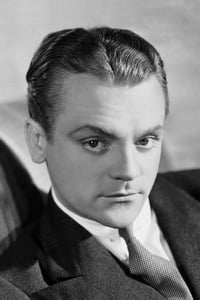
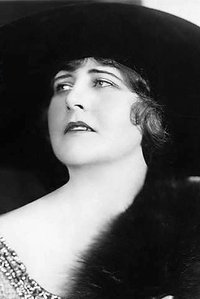
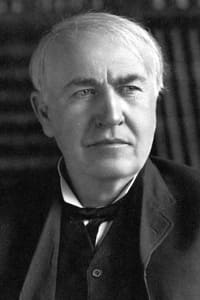
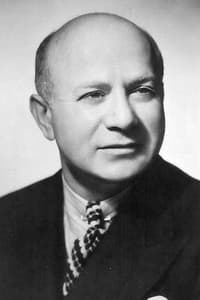
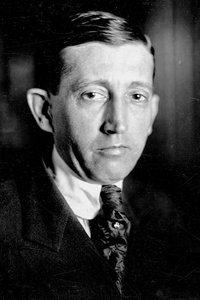
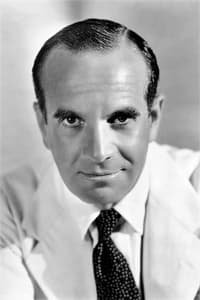
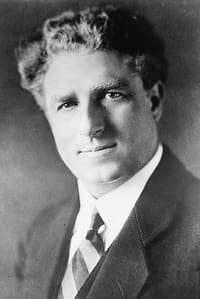
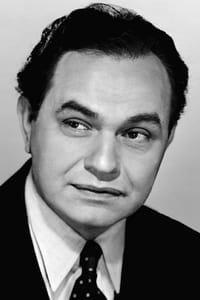
This short was released in connection with the 20th anniversary of Warner Brothers' first exhibition of the Vitaphone sound-on-film process on 6 August 1926. The film highlights Thomas A. Edison and Alexander Graham Bell's efforts that contributed to sound movies and acknowledges the work of Lee De Forest. Brief excerpts from the August 1926 exhibition follow. Clips are then shown from a number of Warner Brothers features, four from the 1920s, the remainder from 1946/47.

Others

Budget

$--

Revenue

$--

Status

Released

Original Language

English

Runtime

20 mins

Rating

5/10

Release Date

07 September 1946

Country

United States of America

Cast

John Barrymore

John Barrymore

Don Juan (archive footage)

James Cagney

James Cagney

Tommy Powers (archive footage)

Anna Case

Anna Case

Thomas A. Edison

Thomas A. Edison

Mischa Elman

Mischa Elman

William H. Hays

William H. Hays

Al Jolson

Al Jolson

Giovanni Martinelli

Giovanni Martinelli

Edward G. Robinson

Edward G. Robinson

Roy Smeck

Roy Smeck

Marion Talley

Marion Talley

Jack L. Warner

Jack L. Warner

Efrem Zimbalist Sr.

Efrem Zimbalist Sr.

Violinist

Mary Astor

Mary Astor

Adriana (archive footage)

Harold Bauer

Harold Bauer

Truman Bradley

Truman Bradley

Jack Carson

Jack Carson

Dane Clark

Dane Clark

John Garfield

John Garfield

Paul Henreid

Paul Henreid

Davey Lee

Davey Lee

John Litel

John Litel

Ida Lupino

Ida Lupino

Dennis Morgan

Dennis Morgan

Franklin D. Roosevelt

Franklin D. Roosevelt

Ann Sheridan

Ann Sheridan

Alexis Smith

Alexis Smith

Kent Smith

Kent Smith

Martha Vickers

Martha Vickers

Similar Movies

6.0

Palace of Ambition

December 1957 •Korean

A nobleman bribes a maidservant to gain access to the palace and poison the crown prince. Another noble, loyal to the royal family, learns the of the plot and must learn the identity of the would-be assassin before he can succeed in throwing the country into chaos.

6.5

Monsieur Truffaut Meets Mr. Hitchcock

August 1999 •English

When Francois Truffaut approached Alfred Hitchcock in 1962 with the idea of having a long conversation with him about his work and publishing this in book form, he didn't imagine that more than four years would pass before Le Cinéma selon Hitchcock finally appeared in 1966. Not only in France but all over the world, Truffaut's Hitchcock interview developed over the years into a standard bible of film literature. In 1983, three years after Hitchcock's death, Truffaut decided to expand his by now legendary book to include a concluding chapter and have it published as the "Edition définitive". This film describes the genesis of the "Hitchbook" and throws light on the strange friendship between two completely different men. The centrepieces are the extracts from the original sound recordings of the interview with the voices of Alfred Hitchcock, Francois Truffaut, and Helen Scott – recordings which have never been heard in public before.

6.5

Captain Blood: A Swashbuckler Is Born

April 2005 •English

This documentary is featured on the DVD for Captain Blood (1935), released in 2005.

6.7

Chaplin Today: 'City Lights'

May 2003 •English

In 1928, as the talkies threw the film industry and film language into turmoil, Chaplin decided that his Tramp character would not be heard. City Lights would not be a talking picture, but it would have a soundtrack. Chaplin personally composed a musical score and sound effects for the picture. With Peter Lord, the famous co-creator of Chicken Run and Wallace & Gromit, we see how Chaplin became the king of slapstick comedy and the superstar of the movies.

3.8

Montgomery Clift

January 1983 •English

A documentary incorporating footage of Montgomery Clift’s most memorable films; interviews with family and friends, and rare archival material stretching back to his childhood. What develops is the story of an intense young boy who yearned for stardom, achieved notable success in such classic films as From Here to Eternity and I Confess, only to be ruined by alcohol addiction and his inability to face his own fears and homosexual desires. Montgomery Clift, as this film portrays him, may not have been a happy man but he never compromised his acting talents for Hollywood.

5.4

The James Dean Story

August 1957 •English

Released two years after James Dean's death, this documentary chronicles his short life and career via black-and-white still photographs, interviews with the aunt and uncle who raised him, his paternal grandparents, a New York City cabdriver friend, the owner of his favorite Los Angeles restaurant, outtakes from East of Eden, footage of the opening night of Giant, and Dean's ironic PSA for safe driving.

6.7

Workers Leaving the Lumière Factory

March 1895 •French

Working men and women leave through the main gate of the Lumière factory in Lyon, France. Filmed on 22 March 1895, it is often referred to as the first real motion picture ever made, although Louis Le Prince's 1888 Roundhay Garden Scene pre-dated it by seven years. Three separate versions of this film exist, which differ from one another in numerous ways. The first version features a carriage drawn by one horse, while in the second version the carriage is drawn by two horses, and there is no carriage at all in the third version. The clothing style is also different between the three versions, demonstrating the different seasons in which each was filmed. This film was made in the 35 mm format with an aspect ratio of 1.33:1, and at a speed of 16 frames per second. At that rate, the 17 meters of film length provided a duration of 46 seconds, holding a total of 800 frames.

7.6

Battleship Potemkin

December 1925 •Russian

A dramatized account of a great Russian naval mutiny and a resultant public demonstration, showing support, which brought on a police massacre.

6.0

Factory Girl

December 2006 •English

In the mid-1960s, wealthy debutant Edie Sedgwick meets artist Andy Warhol. She joins Warhol's famous Factory and becomes his muse. Although she seems to have it all, Edie cannot have the love she craves from Andy, and she has an affair with a charismatic musician, who pushes her to seek independence from the artist and the milieu.

6.8

Loose Change

December 2005 •English

2nd Edition of Loose Change documentary. What if...September 11th was not a surprise attack on America, but rather, a cold and calculated genocide by our own government?We were told that the twin towers were hit by commercial jetliners and subsequently brought down by jet fuel. We were told that the Pentagon was hit by a Boeing 757. We were told that flight 93 crashed in Shanksville, Pennsylvania. We were told that nineteen Arabs from halfway across the globe, acting under orders from Osama Bin Laden, were responsible. What you will see here will prove without a shadow of a doubt that everything you know about 9/11 is a complete fabrication. Conspiracy theory? It's not a theory if you can prove it.Written and narrated by Dylan Avery, this film presents a rebuttal to the official version of the September 11, 2001 terrorist attacks and the 9/11 Commission Report.

6.2

Three Kingdoms: Resurrection of the Dragon

April 2008 •

The aging Zhao embarks on his final and greatest campaign, a road to adventure that will crown his name in glory for all time.

6.4

Roundhay Garden Scene

October 1888 •English

The earliest surviving motion-picture film, and believed to be one of the very first moving images ever created, was shot by Louis Aimé Augustin Le Prince using the LPCCP Type-1 MkII single-lens camera. It was taken on paper-based photographic film in the garden of Oakwood Grange, the Whitley family house in Roundhay, Leeds, West Riding of Yorkshire (UK), on 14 October 1888. The film shows Adolphe Le Prince (Le Prince’s son), Mrs. Sarah Whitley (Le Prince’s mother-in-law), Joseph Whitley, and Miss Harriet Hartley walking around in circles, laughing to themselves, and staying within the area framed by the camera. Roundhay Garden Scene is often associated with a recording speed of around 12 frames per second and runs for about 2 to 3 seconds.

10.0

Impromptu

January 2017 •

A journey to the origins of cinema, starting with its forgotten fathers: the pioneers who achieved moving images before 1895, the official year of the Lumière cinematograph. Through five studies by Frédéric Chopin, 'Impromptu' is also a tribute to the end of the 19th century, to its immortal muses, and to the fascination with movement itself.

6.3

Auge in Auge - Eine deutsche Filmgeschichte

July 2008 •German

This is not merely another film about cinema history; it is a film about the love of cinema, a journey of discovery through over a century of German film history. Ten people working in film today remember their favourite films of yesteryear.

7.6

The Pixar Story

August 2007 •English

A look at the first years of Pixar Animation Studios - from the success of "Toy Story" and Pixar's promotion of talented people, to the building of its East Bay campus, the company's relationship with Disney, and its remarkable initial string of eight hits. The contributions of John Lasseter, Ed Catmull and Steve Jobs are profiled. The decline of two-dimensional animation is chronicled as three-dimensional animation rises. Hard work and creativity seem to share the screen in equal proportions.

6.2

Naples Is a Battlefield

September 1944 •English

The capture of Naples, the first great European city to be liberated, revealed the magnitude of the tasks involved in re-creating the means of livelihood and the machinery of government in a devastated, starving and disease-ridden city.

5.4

The Circus: Premiere

January 1928 •English

Footage from the premiere of Charlie Chaplin's 1928 film 'The Circus'.

6.6

The Brothers Warner

October 2008 •English

An intimate portrait and saga of four film pioneers--Harry, Albert, Sam and Jack who rose from immigrant poverty through personal tragedies persevering to create a major studio with a social conscience.

5.0

The Making of 'Rio Grande'

January 1993 •English

A short documentary about the making of John Ford's "Rio Grande."

4.0

The Great Stone Face

January 1968 •English

A documentary about the work of Buster Keaton.