Movies

HomeMoviesSearchTV SeriesBookmarksView Source
Don't Cry for Me Sudan

Don't Cry for Me Sudan

Genres

Documentary

OverView

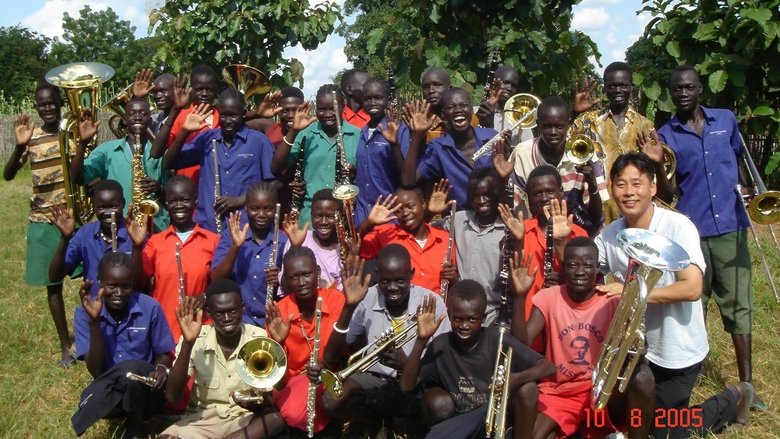
A Schweitzer of Korea Father LEE Tae-seok, devoted his life in Sudan; a remote area of Africa.

Others

Budget

$--

Revenue

$--

Status

Released

Original Language

Korean

Runtime

91 mins

Rating

8/10

Release Date

09 September 2010

Country

South Korea

Cast

Lee Geum-hee

Lee Geum-hee

Narrator

Lee Tae-seok

Lee Tae-seok

Self

Similar Movies

5.1

The Devil and Father Amorth

April 2018 •English

William Friedkin attends an exorcism with Father Gabriele Amorth, as he treats an Italian woman named Cristina for the ninth time. Prior to filming, Cristina had purportedly been experiencing behavioural changes and “fits” that could not be explained by psychiatry, and which became worse during Christian holidays.

10.0

President - Documentary

November 2019 •Korean

8.0

Merton: A Film Biography

January 1984 •English

In his lifetime, Thomas Merton was hailed as a prophet and censured for his outspoken social criticism. For nearly 27 years he was a monk of the austere Trappist order, where he became an eloquent spiritual writer and mystic as well as an anti-war advocate and witness to peace. Merton: A Film Biography provides the first comprehensive look at this remarkable 20th century religious philosopher who wrote, in addition to his immensely popular autobiography The Seven Storey Mountain, over 60 books on some of the most pressing social issues of our time, some of which are excerpted here. Merton offers an engaging profile of a man whose presence in the world touched millions of people and whose words and thoughts continue to have a profound impact and relevance today.

7.0

Religulous

October 2008 •English

Commentator-comic Bill Maher plays devil's advocate with religion as he talks to believers about their faith. Traveling around the world, Maher examines the tenets of Christianity, Judaism and Islam and raises questions about homosexuality, proof of Christ's existence, Jewish Sabbath laws, violent Muslim extremists.

7.2

The Devil Came on Horseback

January 2007 •English

While serving with the African Union, former Marine Capt. Brian Steidle documents the brutal ethnic cleansing occuring in Darfur. Determined that the Western public should know about the atrocities he is witnessing, Steidle contacts New York Times reporter Nicholas Kristof, who publishes some of Steidle's photographic evidence.

0.0

The Chillouks, a Central African Tribe

October 1910 •French

Short documentary on a central african tribe called 'The Chillouks'.

0.0

Don't Cry for Me Sudan: Shukran Baba

January 2020 •Korean

Tonj, Sudan is the land with only desperation from poverty and war. This is the story about priest also doctor, educator, musician and architect Lee Tae-seok’s work and hidden episode behind.

8.4

Lost Kingdom of the Black Pharaohs

December 2019 •English

The Kush Empire was an ancient superpower that dominated the Nile Valley and rivaled the Egyptians, and now, a new, cutting-edge investigation at a mysterious tomb could reveal the secrets of this formidable lost kingdom.

0.0

Ryeohaeng

August 2019 •Korean

A group of women climbs a summer mountain situated in South Korea. They are refugees who have settled into South Korean society after fleeing from North Korea. For them, climbing the mountains has been an unavoidable journey for survival - a matter of life and death.

0.0

Cinema in Sudan: Conversations with Gadalla Gubara

September 2008 •English

The film builds up a portrait of a great Sudanese film-maker, Gadalla Gubara. At eighty-seven, he is one of the pioneers of cinema in Africa. He has recently lost his sight but still continues to film life in Sudan as no one before him. Through his oeuvre, Gadalla reveals to us a Sudan both mysterious and misunderstood. Despite censorship and lack of financial support over sixty years, he has produced cinema that is independent and unique in a country where freedom of expression is a rare luxury.

0.0

Sudan's Forgotten Films

October 2017 •English

Benjamin and Awad run Sudan's national film archive. The two men, who have worked together for more than 40 years, are devoted to protecting their country's visual memories. Home to some 13,000 films, the archive preserves pivotal moments of Sudan's turbulent history and is one of the largest in Africa. But the archive is in a fragile state. Following years of neglect and poor storage, many film reels are turning to dust in Sudan's unforgiving tropical climate. The two friends are determined to turn it around and embark on a mission to save the old films. Will they succeed in preserving Sudan's visual history for future generations before it's too late?

0.0

Light of Love

Invalid date •English

Light of Love We often have ideas of religious life... either kneeling in a convent or out in the streets assisting the poor. While both of these scenes are essential to the life as a sister, Light of Love takes a deeper look into understanding the call... the "why" of religious life. By interviewing five sisters from five orders across the United States, the film places viewers face to face in intimate conversations with these amazing women. What does it mean to be called? What are the struggles of religious life? How have you seen God move through your ministry? These questions and others are addressed throughout the film. The film itself is very simple: 60 minutes designed for viewers to quiet their surroundings and enter into convent, the food pantry, the hospital, and the chapel. With minimal music and simple visuals, Light of Love gives viewers a look into the lives, suffering, and joys of religious life captured in a way like never before.

6.1

Darfur Now

November 2007 •English

This acclaimed documentary follows the story of six people who are determined to end the sufferings in Sudan's war-ravaged Darfur. The six - an American activist, an international prosecutor, a Sudanese rebel, a sheikh, a leader of the World Food Program and an internationally known actor - demonstrate the power of how one individual can create extraordinary changes.

6.6

Procession

November 2021 •English

Six men who were sexually abused by Catholic clergy as boys find empowerment by creating short films inspired by their trauma.

0.0

Hexenkinder

September 2020 •German

The movie recalls children who suffered mental and physical harm both during the last century, particularly in religious orphanages, and during the time of early modernperiod witch-hunts. It shows that the mindsets and behavioural patterns of both time periods are more alike than one might think.

5.7

Day of the Fight

April 1951 •English

Stanley Kubrick’s debut documentary, following Irish-American middleweight boxer Walter Cartier on April 17, 1950—the day of his bout with Bobby James. The film traces Cartier’s quiet morning rituals, training, and anxious hours before the match, culminating in his swift victory that night in Newark. Opening with a brief history of boxing, Kubrick’s tightly crafted short captures the discipline, isolation, and tension behind a fighter’s daily routine.

0.0

Behind the Veil: Nuns

September 1984 •English

The history of nuns mirrors the history of all women -- in what we are taught about the past, women are almost invisible. Although today's one million nuns outnumber priests two to one, they must struggle to be heard by the all-male Roman Catholic hierarchy from which they are excluded. Behind the Veil: Nuns is the first film ever to record from a global perspective the turbulent history and remarkable achievements of women in religion, from pre-Christian Celtic communities to the radical sisters of the 1980s. Contemporary nuns of strength, dignity and commitment speak of their lives and of their predecessors.

7.0

A Different Kind of Gun

January 2007 •Arabic

"The reason why they kill people is because they do not have any education," a Sudanese boy says about the bloody conflict in his fatherland. Shortly before, we see images of a bombed school. In this film, the youngest and most innocent generation of Sudanese explains how it deals with the war that is tearing the country apart. Will the orphaned children avenge their murdered parents, or will they forgive the killers and start working on a new life? At any rate, these children's dreams for the future are anything but violent. One of them wants to learn English to be able to liberate his country, another wants to study to "be something," a third wants to become president to bring total peace, and yet another simply wants to be like her grandmother. Despite all the atrocities they have witnessed, the children mainly want to rebuild things, to put an end to the destruction.

10.0

Sands of Silence

October 2016 •English

Inspired by the transformation of the sex-trafficking survivors whose lives she follows, the filmmaker finds the courage to break the silence about sexual abuse in her own life.

0.0

Ka Ke Ki Ku

January 1960 •French

This early work from Pierre Perrault, made in collaboration with René Bonnière, chronicles summer activities in the Innu communities of Unamenshipu (La Romaine) and Pakuashipi. Shot by noted cinematographer Michel Thomas-d’Hoste, it documents the construction of a traditional canoe, fishing along the Coucouchou River, a procession marking the Christian feast of the Assumption, and the departure of children for residential schools—an event presented here in an uncritical light. Perrault’s narration, delivered by an anonymous male voice, underscores the film’s outsider gaze on its Indigenous subjects. The film is from Au Pays de Neufve-France (1960), a series produced by Crawley Films, an important early Canadian producer of documentary films.