Movies

HomeMoviesSearchTV SeriesBookmarksView Source
Father of the City
Father of the City

Father of the City

Genres

Documentary

OverView

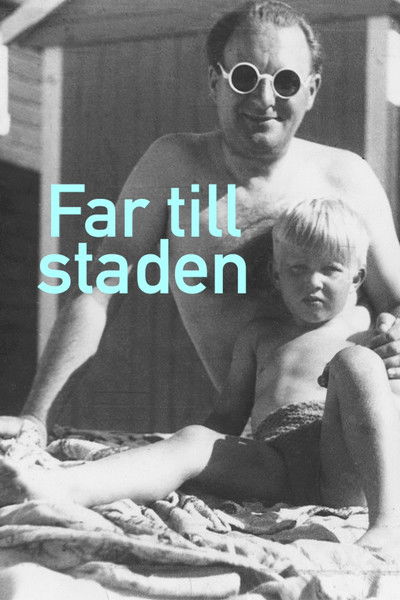
A film about "the father" of Malmö Eric Svenning and how the city has developed during his time.

Others

Budget

$--

Revenue

$--

Status

Released

Original Language

Swedish

Runtime

57 mins

Rating

0/10

Release Date

06 June 2001

Country

Sweden
Cast

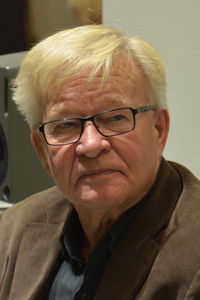
Olle Svenning

Olle Svenning

Himself

Similar Movies

0.0

Shellmound

September 2004 •English

“Shellmound” is the story of how one location was transformed from a sacred center of pre-historic cultures to a commercial mecca for modern people. What began as a Native American burial ground three thousand years ago, was transformed first into an amusement park, and later an industrial age paint factory. Now, the tainted ancient soil sits beneath the glittering lights of Banana Republic, Victoria’s Secret, and the AMC movie theaters. “Shellmound” examines the decisions made during the recent toxic cleanup, excavation, and construction of the Bay Street mall through the eyes of the city of Emeryville, the developer, the archaeologists, and the native Californians who worked on the site.

2.0

Survival in Berlin-Neukölln

November 2017 •German

About Stefan Stricker, who calls himself Juwelia and has been running a gallery on Sanderstraße in Berlin Neukölln for many years. Every weekend he invites guests to shamelessly recount from his life and to sing poetic songs written with his friend from Hollywood Jose Promis. Juwelia has been poor and sexy all her life, has always struggled for recognition, but only partially.

0.0

Prime Farmland

August 2020 •English

This documentary film follows farmers and activists fighting together to stop the Indiana Enterprise Center, a mega-sized industrial park planned west of South Bend, Indiana

0.0

Rekordåren 66/67/68

May 1969 •Swedish

Critical documentary about urban planning in the city of Stockholm. Made by students at the Swedish Film Institute's film school. The film created a great debate in Swedish media and especially between the film institute's CEO Harry Schein and the filmmakers.

6.4

Radiant City

May 2007 •English

Since the end of World War II, one of kind of urban residential development has dominate how cities in North America have grown, the suburbs. In these artificial neighborhoods, there is a sense of careless sprawl in an car dominated culture that ineffectually tries to create the more organically grown older communities. Interspersed with the comments of various experts about the nature of suburbia

7.5

Berlin: Symphony of a Great City

September 1927 •German

A day in the city of Berlin, which experienced an industrial boom in the 1920s, and still provides an insight into the living and working conditions at that time. Germany had just recovered a little from the worst consequences of the First World War, the great economic crisis was still a few years away and Hitler was not yet an issue at the time.

7.5

Make No Little Plans: Daniel Burnham and the American City

April 2010 •English

Make No Little Plans: Daniel Burnham and the American City reveals the fascinating life and complex legacy of architect and city planner Daniel Hudson Burnham. In the midst of the late nineteenth century urban disorder, Burnham offered a powerful vision of what a civilized American city could look like, one that provided a compelling framework for Americans to make sense of the world around them. A timely, intriguing story in the American experience, Make No Little Plans explores Burnham's impact on the development of the American city as debate continues today about what urban planning means in a democratic society.

6.0

Moments in Helsinki

January 1971 •Finnish

A compilation of excerpts from old Helsinki-themed documentaries and new material.

6.0

Bauhaus Spirit: 100 Years of Bauhaus

April 2018 •German

Founded in 1919 by Walter Gropius, Bauhaus was supposed to unite sculpture, painting, design and architecture into a single combined constructive discipline. It is a synthesis of liberated imagination and stringent structure; cross-medial concepts that embellish and enrich our existence, illumination and clarity, order and playfulness. But Bauhaus was never just an artistic experiment. Confronted with the social conditions of that particular time, as well as the experience of WWI, the movement concerned itself with the political and social connotations of design from the very outset. Hence, Bauhaus history is not just the history of art, but also the history of an era that stretches from the early 20th century to the modern day.

6.3

Nadja in Paris

January 1964 •French

Nadja is a guest student, who stays at Cité Universitaire and visits the Sorbonne, while preparing a thesis on Proust; she also likes to stroll about Paris.

0.0

The Iron Triangle: Willets Point and the Remaking of New York

November 2017 •English

Targeted for several failed redevelopment plans dating back to the days of Robert Moses, Willets Point, a gritty area in New York City known as the “Iron Triangle,” is the home of hundreds of immigrant-run, auto repair shops that thrive despite a lack of municipal infrastructure support. During the last year of the Bloomberg Administration, NYC’s government advanced plans for a “dynamic” high-end entertainment district that would completely wipe out this historic industrial core. The year is 2013, and the workers of Willets Point are racing against the clock to forestall their impending eviction. Their story launches an investigation into New York City’s history as the front line of deindustrialization, urban renewal, and gentrification.

0.0

Le bled (Buildings in a Field)

January 2009 •English

A collaboration between Jem Cohen with writer Luc Sante made in Tangier, Morocco, a city where neither of us had ever been. En route from the airport to the city center, we found ourselves amazed by the landscape outside of the car windows; a massive construction project under way in all directions. While not in itself unusual, we were by struck dumb by the epic scale and seemingly incomprehensible plan of the development and were drawn to return together to this puzzling zone. This project was commissioned by TAMAAS, a small foundation based in Paris, as part of their Tangier project, The 8.

6.0

I Love This Dirty Town

January 1969 •English

An authored film by Margaret Drabble about the rise of the suburbs and the failure of city planning.

6.7

Manhatta

January 1921 •English

Morning reveals New York harbor, the wharves, the Brooklyn Bridge. A ferry boat docks, disgorging its huddled mass. People move briskly along Wall St. or stroll more languorously through a cemetery. Ranks of skyscrapers extrude columns of smoke and steam. In plain view. Or framed, as through a balustrade. A crane promotes the city's upward progress, as an ironworker balances on a high beam. A locomotive in a railway yard prepares to depart, while an arriving ocean liner jostles with attentive tugboats. Fading sunlight is reflected in the waters of the harbor. The imagery is interspersed with quotations from Walt Whitman, who is left unnamed.

7.0

15 Miles On The Erie Canal (Part 1)

March 2006 •English

The Erie Canal was an engineering marvel in its time and remains so today. This documentary travels from Palmyra to the Genesee River, stopping along the way to visit the people and places that make the canal so special. Canal historian Thomas Grasso offers insight into the canal’s past while the Golden Eagle String Band provides the music track.

0.0

Sapporo - Planned Growth

January 1974 •English

This feature documentary zooms in on the city of Sapporo, on the Island of Hokkaïdo in southern Japan. In contrast to the unplanned sprawl of neighbouring industrialized cities, Sapporo appears to be one of the best-planned large cities in the world, combining growth and technology with town planning and the preservation of green spaces.

0.0

Saskatoon: Land and Growth Control

January 1974 •English

In the city of Saskatoon, Saskatchewan, an effective government policy of controlling land investment prevents speculation, keeps land prices down, and provides a good balance between commercial, residential and public areas.

8.0

Quand la Seine débordera

March 2023 •French

6.9

A Respectable Life

March 1979 •Swedish

A decade has gone by and the spirit of the preceding film, Dom kallar oss mods, has disappeared. Kenta is an alcoholic and lives with his girlfriend Eva. Together they have a son, Patric. Kenta's mom is in jail for manslaughter and Kenta goes to Kronoberg to greet her. Heroin also comes to play and Stoffe is one of those who falls victim to it. He lives with his girlfriend Lena and their young son, Janne. Lena later throws Stoffe out their home when she gets enough of his abuse, and he is forced to live with his mother. Kenta calls Stoffe and decides to meet him, and he tries to persuade him to give up heroin, but the two have a falling out and they separate. This film features other users from the previous film, such as Jajje and Kenta Bergkvist. The film ends with the death of a prominent person in the trilogy.

6.1

Misfits to Yuppies

April 1993 •Swedish

Misfits to Yuppies is the last of three films (Dom kallar oss mods, Ett anständigt liv, Det sociala arvet) that shows conditions for addicts in Stockholm and try to find out how social legacy have been transferred to their children from previous films.