Movies

HomeMoviesSearchTV SeriesBookmarksView Source
Die Brücke: The Birth of Modern Art in Germany

Die Brücke: The Birth of Modern Art in Germany

Genres

Documentary

OverView

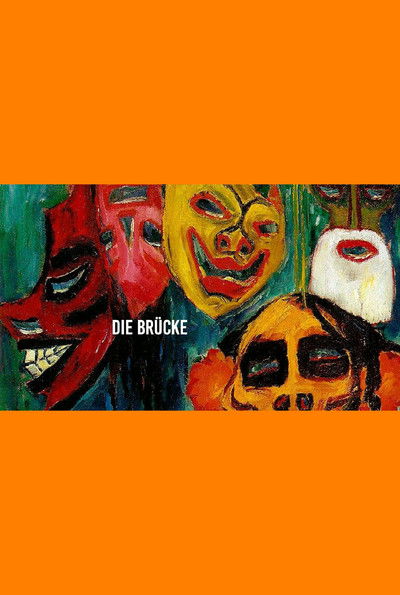
This movement marks the beginning of modern art in Germany. It is the German equivalent of French Fauvism, from which it draws its main inspiration, but it carries an Expressionist and social emphasis that is characteristic of Nordic 'angst.' The artists of Die Brucke were restless creatures, over-sensitive, haunted by religious, sexual, political or moral obsessions. Dramatic landscapes and nudes, mystical and visionary compositions, scenes of the countryside, the streets, the circus, the cafe-dansants and the demi-monde were their principal subjects. Their pure colours blaze in acid stridency, encompassed by rough, dry contours which show the influence of African art and primitive woodcuts. The work of the following is shown: Kirchner, Fritz Bleyl, Erich Heckel, Schmidt-Rottluff, Otto Muller, Emil Nolde and Max Pechstein.

Others

Budget

$--

Revenue

$--

Status

Released

Original Language

German

Runtime

24 mins

Rating

0/10

Release Date

01 January 1972

Country

Germany

Cast

Similar Movies

0.0

The Real Beauty and the Beast

June 2013 •English

It's a condition known as "hypertrichosis" or "Ambras Syndrome," but in the 1500s it would transform one man into a national sensation and iconic fairy-tale character. His name: Petrus Gonsalvus, more commonly known today as the hairy hero of Beauty and the Beast.

8.0

James Ensor: Demons Teasing Me

October 2010 •English

This film explains what James Ensor (1860-1949) meant for the development of art and makes palpable where he got his inspiration from.

0.0

What the Darkness Cannot Extinguish: The Storytelling Madness of Clifford George

June 2023 •English

A feature-length documentary celebrating the life and work of Trinity Bay artist and storyteller Clifford George.

7.3

National Gallery

October 2014 •English

A portrait of the day-to-day operations of the National Gallery of London, that reveals the role of the employees and the experiences of the Gallery's visitors. The film portrays the role of the curators and conservators; the education, scientific, and conservation departments; and the audience of all kinds of people who come to experience it.

6.0

Islamic Art: Mirror of the Invisible World

June 2011 •English

This ninety-minute film takes audiences on an epic journey across nine countries and over 1,400 years of history. It explores themes such as the Word, Space, Ornament, Color and Water and presents the stories behind many great masterworks of Islamic Art and Architecture. Narrated by Academy Award winning performer Susan Sarandon, this dazzling documentary reveals the variety and diversity of Islamic art. It provides a window into Islamic culture and brings broad insights to the enduring themes that have propelled human history and fueled the rise of world civilization over the centuries

5.0

Max Ernst: Journey into the Subconscious

January 1964 •English

The inner world of the great painter Max Ernst is the subject of this film. One of the principal founders of Surrealism, Max Ernst explores the nature of materials and the emotional significance of shapes to combine with his collages and netherworld canvases. The director and Ernst together use the film creatively as a medium to explain the artist's own development.

0.0

Equipo Crónica. Arte de trinchera

February 2025 •Spanish

6.0

White Walls Say Nothing

May 2017 •Spanish

Buenos Aires is a complex, chaotic city. It has European style and a Latin American heart. It has oscillated between dictatorship and democracy for over a century, and its citizens have faced brutal oppression and economic disaster. Throughout all this, successive generations of activists and artists have taken to the streets of this city to express themselves through art. This has given the walls a powerful and symbolic role: they have become the city’s voice. This tradition of expression in public space, of art and activism interweaving, has made the streets of Buenos Aires into a riot of colour and communication, giving the world a lesson in how to make resistance beautiful.

0.0

Mi Vida Me Pasa

August 2024 •Spanish

Arturo Urbiola, independent singer/songwriter, talks about the influence music has had on his life, it's impact, and what's in store for his artistic career after becoming a father.

7.5

The Painting

November 2019 •Spanish

For three and a half centuries, from the same day that Diego Velázquez (1599-1660) applied his last brushstroke to the canvas, the enigma of “Las meninas, o La familia de Felipe IV” (1656) has not been deciphered. The secret story of a painting unveiled as if it was the resolution of a perfect crime.

7.1

The Beksińskis. A Sound and Picture Album

May 2017 •Polish

Painter Zdzisław Beksiński, his wife Zofia and their son Tomasz, a well-known radio journalist and translator, were a typical and unconventional family, both at the same time. One of the father’s obsessions was filming himself and his family members. Using archival footage only, shot primarily by Zdzisław, as well many other materials, which have not been presented anywhere so far, the film tells a tragic story of the Beksińskis that has never ceased to fascinate Polish filmmakers.

0.0

Aleš I.

December 1950 •Czech

The first part of the documentary about the work of the Czech painter Mikoláš Alš called "The Song of Life", which focuses on the part of his work that draws its themes from life in the village.

6.1

Pablo Picasso et Françoise Gilot : la femme qui dit non

June 2020 •French

Painter Françoise Gilot shared Pablo Picasso's life from 1943 to 1953. This union nourished their respective artistic creations.

7.0

Secret Mall Apartment

March 2025 •English

In 2003, eight Rhode Islanders created a secret apartment inside a busy mall and lived there for four years, filming everything along the way. Far more than a prank, the secret apartment became a deeply meaningful place for all involved.

0.0

Bob and Roberta's Excellent Protest Adventure

November 2016 •English

British artist, academic, musician and activist Bob and Roberta Smith has been waging slightly odd political protests for years, in this documentary he investigates the age of activism and discovers what people are protesting about.

6.5

Fried Shoes Cooked Diamonds

October 1979 •English

After World War II a group of young writers, outsiders and friends who were disillusioned by the pursuit of the American dream met in New York City. Associated through mutual friendships, these cultural dissidents looked for new ways and means to express themselves. Soon their writings found an audience and the American media took notice, dubbing them the Beat Generation. Members of this group included writers Jack Kerouac, William Burroughs, Allen Ginsberg. a trinity that would ultimately influence the works of others during that era, including the "hippie" movement of the '60s. In this 55-minute video narrated by Allen Ginsberg, members of the Beat Generation (including the aforementioned Burroughs, Anne Waldman, Peter Orlovsky, Amiri Baraka, Diane Di Prima, and Timothy Leary) are reunited at Naropa University in Boulder, CO during the late 1970's to share their works and influence a new generation of young American bohemians.

7.8

I Needed Color

July 2017 •English

Jim Carrey exhibits his talent as a painter and reflects on the value and power of art.

0.0

Mistr Theodorik

January 1994 •Czech

0.0

Cecil Taylor: All The Notes

January 2005 •English

Cecil Taylor was the grand master of free jazz piano. "All the Notes" captures in breezy fashion the unconventional stance of this media-shy modern musical genius, regarded as one of the true giants of post-war music. Seated at his beloved and battered piano in his Brooklyn brownstone the maestro holds court with frequent stentorian pronouncements on life, art and music.

0.0

Gauguin: A Dangerous Life

December 2019 •English

Gauguin’s vivid artworks sell for millions. He was an inspired and committed multi-media artist who worked with the Impressionists and had a tempestuous relationship with Vincent van Gogh. But he was also a competitive and rapacious man who left his wife to bring up five children and used his colonial privilege to travel to Polynesia, where in his 40s he took ‘wives’ between 13 and 15 years old, creating images of them and their world that promoted a fantasy paradise of an unspoilt Eden in the Pacific. Later, he challenged the colonial authorities and the Catholic Church in defence of the indigenous people, dying in the Marquesas Islands in 1903, sick, impoverished and alone.