Movies

HomeMoviesSearchTV SeriesBookmarksView Source
Fantome Island
Fantome Island

Fantome Island

Genres

Documentary

OverView

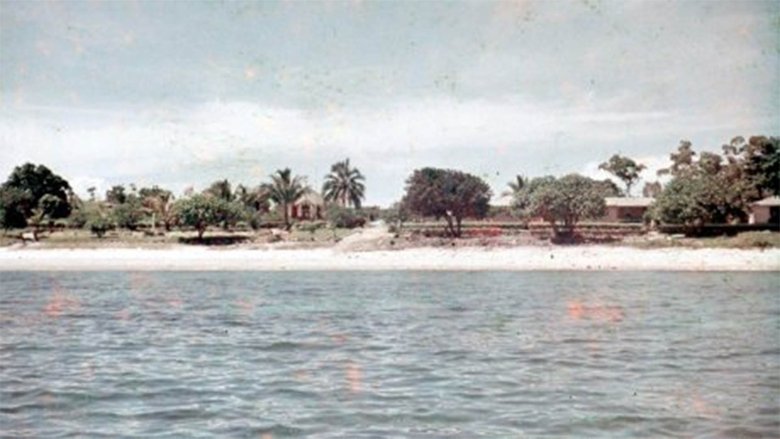
In 1945, at the age of seven, a young Joe Eggmolesse was diagnosed with Leprosy. He was immediately removed from his family and home and transported under police escort over a thousand kilometres to be confined on an island for the treatment of the disease. For the next ten years, a leprosarium for Aboriginal people became his home. A lush tropical idyll off the north east coast of Australia, Fantome Island was the home to a close knit community of indigenous 'lepers' who made the most of their existence as people living on the fringes of the marginalised. Now as a 73 year old Joe reflects on his indelible Fantome years. His incredible, poignant story offers a profound insight into one of Australia's hidden histories.

Others

Budget

$--

Revenue

$--

Status

Released

Original Language

English

Runtime

88 mins

Rating

0/10

Release Date

13 July 2011

Country

Australia

Cast

Joe Eggmolesse

Joe Eggmolesse

Self

Similar Movies

0.0

My Survival as an Aboriginal

July 1979 •English

Essie Coffey gives the children lessons on Aboriginal culture. She speaks of the importance of teaching these kids about their traditions. Aboriginal kids are forgetting about their Aboriginal heritage because they are being taught white culture instead.

1.0

88.9 Radio Redfern

September 1989 •English

An observational documentary which looks at Sydney’s first community Aboriginal radio station, 88.9 Radio Redfern. Set against a backdrop of contemporary Aboriginal music, 88.9 Radio Redfern offers a special and rare exploration of the people, attitudes and philosophies behind the lead up to a different type of celebration of Australia’s Bicentennial Year. Throughout 1988, 88.9 Radio Redfern became an important focal point for communication and solidarity within the Aboriginal community. The film reveals how urban blacks are adapting social structures such as the mass media to serve their needs.

0.0

My Life As I Live It

December 1993 •English

In her second film, MY LIFE AS I LIVE IT (1993), Essie Coffey returns to her home in Dodge City where she and the A-Team are running in the shire elections. Inter-cutting between 1993 and 1978, the film presents the fascinating contrasts of a society in transition. Some of the kids we met in the earlier film now have families of their own and are involved in education, art and sports. Others are drifting, trying to cope with alcohol and depression. Most significantly, community programs offer the possibility of dignity and self-determination. In this film, Essie shows us the Community Development Employment Program (CDEP) making a real difference. Although the CDEP has now come under attack from the Federal government, MY LIFE AS I LIVE IT portrays the CDEP as providing meaningful work and services to an impoverished remote community.

6.6

Gulpilil: One Red Blood

April 2002 •English

An hour-long documentary on the life and career of actor David Gulpilil.

6.7

We Don't Need a Map

June 2017 •English

Filmmaker Warwick Thornton investigates our relationship to the Southern Cross, in this fun and thought provoking ride through Australia's cultural and political landscape.

8.0

Paris : Les Lieux secrets de l'occupation

May 2017 •French

0.0

Incarceration Nation

August 2021 •English

An examination of the connection between relentless government intervention since colonisation to the trauma and disadvantage experiences by Indigenous Australians - the two key drivers of incarceration.

8.0

The Bowraville Murders

September 2021 •English

The epic David vs Goliath battle for justice waged by the families of three Aboriginal children murdered in a small rural town 30 years ago, the system that failed them, and what it reveals about racism in Australia today.

7.0

Auschwitz: Countdown To Liberation

January 2025 •English

7.5

Little Dieter Needs to Fly

December 1997 •English

Three decades after German-American pilot Dieter Dengler was shot down over Laos, he returns to the places where he was held prisoner during the early years of the Vietnam War. Accompanied by director Werner Herzog, Dengler describes in unusually candid detail his captivity, the friendships he made, and his daring escape. Not willing to stop there, Herzog even persuades his subject to re-enact certain tortures, with the help of some willing local villagers.

0.0

Young Mob Questioning Treaty

October 2019 •English

Young Aboriginal people who are traditional custodians in Victoria explore the Treaty process with questions, concerns and their opinions. Sharing their insights into what has been happening and what needs to happen.

10.0

Queen of the Desert

October 2012 •English

Not only has she got pink extensions, painted on eyebrows, glitter stockings and superman hotpants, Starlady’s a youth worker in some of Australia’s most remote and challenging places. And she reckons that hairdressing can improve people’s lives. Like a real life Priscilla, Starlady takes us on a Queen of the Desert journey to Areyonga, an indigenous community in Central Australia, where she’ll work with a group of curious and cheeky young people.

0.0

Voice

August 2024 •English

With a national vote approaching to enshrine Indigenous peoples voice in the constitution, a dynamic Indigenous youth group travel on a pilgrimage across Australia to commemorate a historic civil rights victory. Buoyed by the imminent referendum, the group voyage through ephemeral Australian landscape in the microcosm of a minibus, sharing the rich, multilayered stories of their personal histories, as they dream up a hopeful new vision for Australia. As the results of the vote are counted, it’s impact on their future offer two paths – a hopeful breakthrough or another chapter in the long fight for recognition.

7.5

The Final Quarter

June 2019 •English

Australian documentary filmmaker Ian Darling re-examines the incidents that marked the final 3 years of Indigenous footballer Adam Goodes' playing career. Made entirely from archival footage, photos and interviews sourced from television, radio and newspapers, the film reviews the national conversation that took place over this period.

8.0

The Power of Activism

July 2022 •English

This film takes us on an emotional journey from sacred ground above Byron Bay to Antarctica, Indonesia to Pakistan, and is sure to light a fire under the strongest climate change denier. THE POWER OF ACTIVISM focuses on six highly spirited female activists as they are put under the microscope to ascertain the financial impact of their environmental solutions… and the results are astonishing. From shark conservation to indigenous practices, intensive farming to plastic pollution; all their ‘causes' fall under the umbrella of "climate change", but they should also fall under the umbrella of "saving tax payers hundreds of millions of dollars!”

8.0

Firestarter: The Story of Bangarra

February 2021 •English

Taking us through Bangarra Dance Theatre’s spectacular growth, we follow the story of how three young Aboriginal brothers — Stephen, David and Russell Page — turned the newly born dance group into a First Nations cultural powerhouse.

8.0

Freeman

September 2020 •English

The story of a nation coming together around Indigenous athlete Cathy Freeman who delivered when it mattered on the greatest stage on earth. 20 years on, Freeman sheds light on one of Australia's proudest moments. In 49.11 seconds, Cathy Freeman's win at the 2000 Sydney Olympics brought Australia together as a nation.

0.0

Cop It Sweet

March 1992 •English

In the winter of 1991 an ABC film crew spent six weeks following Sydney's Redfern police. The inner city patrol of Redfern is predominantly working class with a large aboriginal and migrant population. The police in this film are general duties officers mostly on mobile patrols. At the time of filming 78% of police at Redfern were under the age of 25.

8.2

Back to Chernobyl

January 2020 •Hebrew

The film tells the story of the Chernobyl accident through a mosaic of unique personal testimonies of its participants. The experiences of the difficult past and the sad results of the present recreate the full picture of the accident 30 years later.

5.0

Island Home Country

August 2008 •English

A poetic cine-essay about race and Australia’s colonised history and how it impacts into the present offering insights into how various individuals deal with the traumatic legacies of British colonialism and its race-based policies. The film’s consultative process, with ‘Respecting Cultures’ (Tasmanian Aboriginal Protocols), offers an evolving shift in Australian historical narratives from the frontier wars, to one of diverse peoples working through historical trauma in a process of decolonisation.