Movies

HomeMoviesSearchTV SeriesBookmarksView Source
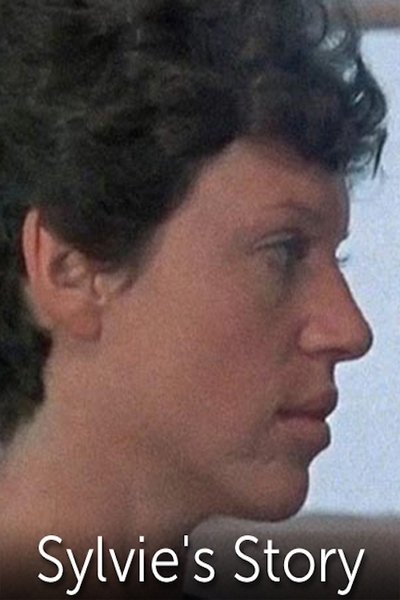
Sylvie's Story

Sylvie's Story

Genres

Documentary

OverView

This short film recreates the experience of Sylvie, a battered woman who seeks shelter in a Montréal transition house. Faced with the threat of violence, loneliness, the lack of financial resources or information about services, the victim is often understandably reluctant to seek help. Emphasizing the importance for women of speaking out, the film also points out the role of the transition house in putting victims of abuse in touch with appropriate legal and social services.

Others

Budget

$--

Revenue

$--

Status

Released

Original Language

English

Runtime

28 mins

Rating

0/10

Release Date

01 January 1986

Country

Canada

Cast

Holly Dressel

Holly Dressel

Narrator (voice)

Michèle Magny

Michèle Magny

Narrator

Similar Movies

6.0

Gonzalo Suárez: Sam Peckinpah, director salvaje (TV)

May 2011 •Spanish

6.0

Ocharcoaga

January 1961 •Spanish

Filmed to praise the work of the Spanish Ministry of Housing in solving the problem of shanty towns in Bilbao, it was made to be viewed by General Franco and not for public screening or distribution through the NO-DO newsreel. Although the short film was commissioned by the Ministry of Housing, director Jorge Grau produced a subtly critical work.

8.2

Night and Fog

April 1959 •French

Filmmaker Alain Resnais documents the atrocities behind the walls of Hitler's concentration camps.

6.0

Goya

October 1950 •Italian

Presents life in 18th century Spain as the painter Francisco de Goya showed it to us.

7.3

Dear Chantal

May 2021 •Spanish

Pereda returns with a small, mysterious and moving tribute to Chantal Akerman, conceived as a series of joyful impossible letters addressed to the great disappeared from the cinema, to answer her fictional question about renting her bright apartment in Coyoacán.

7.0

Jane by Charlotte

January 2022 •French

Charlotte Gainsbourg looks at her mother Jane Birkin in a way she never did, overcoming a sense of reserve. Using a camera lens, they expose themselves to each other, begin to step back, leaving space for a mother-daughter relationship.

0.0

Interview with Robert Kramer

January 2015 •English

This last testimony of Robert Kramer (1939-1999) is a moving documentary with the independent American film director, in which he speaks of his political activism, his way of filmmaking, his relationship with Portugal and the revolutionary movements.

0.0

People Unite!

March 2022 •English

In the face of AAPI violence, an intergenerational coalition of Black, Indigenous, Latinx, Asian, People of Color organizers come together to organize a march across historic Washington Heights and Harlem, as a continuation of the historic and radical Black and Asian solidarity tradition.

4.7

Victory in Soviet Ukraine

April 1945 •Russian

A wartime documentary directed by Alexander Dovzhenko and Yuliya Solntseva, depicting the final campaigns that drove Nazi forces from Ukraine in 1944–45. Combining frontline footage, liberated cityscapes, and scenes of returning civilians, the film chronicles both the devastation of occupation and the triumph of Soviet arms. It stands as both a historical record of the Ukrainian front and a patriotic celebration of victory at the close of the Second World War.

5.2

Ukraine in Flames

April 1943 •Russian

A 1943 Soviet war propaganda film by Ukrainian director Oleksandr Dovzhenko and Yuliya Solntseva. It is Dovzhenko's second World War II documentary, and dealt with the Battle of Kharkiv. The film incorporates German footage of the invasion of Ukraine, which was later captured by the Soviets.

6.3

Liberation

April 1940 •Ukrainian

Wartime documentary by Dovzhenko and Solntseva.

6.0

-22.7°C The Far North Musical Experience

March 2019 •English

The music producer Molécule stayed in a village in Greeland, where he recorded the sounds of the Artic to compose music. The viewer follows Molécule in his adventure in the extreme North, in a sensorial and musical immersion.

8.0

On Sugar Workers' Quarters

June 1971 •Spanish

Documentary about the history of the bateyes, informal settlements surrounding the mills to house workers. Throughout the film, Sara Gómez recovers the political and cultural relevance of black migrants.

7.1

Land Without Bread

December 1933 •Spanish

An exploration —manipulated and staged— of life in Las Hurdes, in the province of Cáceres, in Extremadura, Spain, as it was in 1932. Insalubrity, misery and lack of opportunities provoke the emigration of young people and the solitude of those who remain in the desolation of one of the poorest and least developed Spanish regions at that time.

6.8

Olympia Part One: Festival of the Nations

April 1938 •German

Starting with a long and lyrical overture, evoking the origins of the Olympic Games in ancient Greece, Riefenstahl covers twenty-one athletic events in the first half of this two-part love letter to the human body and spirit, culminating with the marathon, where Jesse Owens became the first track and field athlete to win four gold medals in a single Olympics.

6.7

Olympia Part Two: Festival of Beauty

June 1938 •German

Part two of Leni Riefenstahl's monumental examination of the 1938 Olympic Games, the cameras leave the main stadium and venture into the many halls and fields deployed for such sports as fencing, polo, cycling, and the modern pentathlon, which was won by American Glenn Morris.

6.7

Workers Leaving the Lumière Factory

March 1895 •French

Working men and women leave through the main gate of the Lumière factory in Lyon, France. Filmed on 22 March 1895, it is often referred to as the first real motion picture ever made, although Louis Le Prince's 1888 Roundhay Garden Scene pre-dated it by seven years. Three separate versions of this film exist, which differ from one another in numerous ways. The first version features a carriage drawn by one horse, while in the second version the carriage is drawn by two horses, and there is no carriage at all in the third version. The clothing style is also different between the three versions, demonstrating the different seasons in which each was filmed. This film was made in the 35 mm format with an aspect ratio of 1.33:1, and at a speed of 16 frames per second. At that rate, the 17 meters of film length provided a duration of 46 seconds, holding a total of 800 frames.

7.1

The Story of the Weeping Camel

June 2003 •Mongolian

When a Mongolian nomadic family's newest camel colt is rejected by its mother, a musician is needed for a ritual to change her mind.

0.0

The Birds Changed Names And The World Turned Into Ice

October 2022 •Spanish

Migrant families experience violence, but they also keep beautiful memories when they arrive in new lands. Fantastic and intimate stories, recalled from childhood, travel across time and space, magically intermingling with the help of the four elements and breaking the boundaries of cinema.

0.0

The Hills of Qaytariyeh

April 1969 •Persian

A strange and mischievous documentary on an archeological site in the Qaytarieh hills in Tehran. This short narrates the story of the dead people who wished never to be found.