Movies

HomeMoviesSearchTV SeriesBookmarksView Source
Amour de vivre
Amour de vivre

Amour de vivre

Genres

DocumentaryTV Movie

OverView

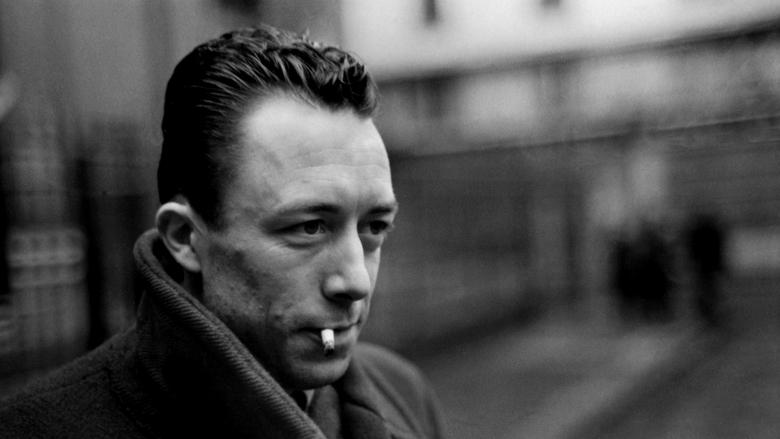
An account of the brief life of the writer Albert Camus (1913-1960), a Frenchman born in Algeria: his Spanish origin on the isle of Menorca, his childhood in Algiers, his literary career and his constant struggle against the pomposity of French bourgeois intellectuals, his communist commitment, his love for Spain and his opposition to the independence of Algeria, since it would cause the loss of his true home, his definitive estrangement.

Others

Budget

$--

Revenue

$--

Status

Released

Original Language

French

Runtime

52 mins

Rating

5.5/10

Release Date

01 May 2010

Country

Spain

Cast

Michael Mesquida

Michael Mesquida

Narrator (voice)

Agnès Spiquel

Agnès Spiquel

Self - Camus' Scholar

Josefina Salord

Josefina Salord

Self - Philologist and Camus' Scholar

Jean-Jacques Jordi

Jean-Jacques Jordi

Self - Historian

Marta Marfany

Marta Marfany

Self - Writer

Khelhil Redovane

Khelhil Redovane

Self - Baker

Jean-Claude Xuereb

Jean-Claude Xuereb

Self - Poet

Pierre-Louis Rey

Pierre-Louis Rey

Self - Writer

Christiane Chaulet-Achour

Christiane Chaulet-Achour

Self - Professor of Literature

Henri Bonnamour

Henri Bonnamour

Self - Priest

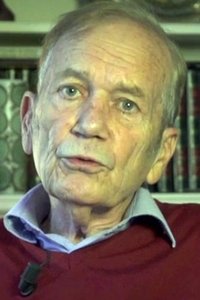
Olivier Todd

Olivier Todd

Self - Camus' Biographer

François Chavanes

François Chavanes

Self - Priest and Writer

Joan Triadú

Joan Triadú

Self - Camus' Scholar

Sami Naïr

Sami Naïr

Self - Philosopher

Pere Maragall i Mira

Pere Maragall i Mira

Self - Historian

Abdellah Abdi

Abdellah Abdi

Self - Library Curator

Maïssa Bey

Maïssa Bey

Self - Writer

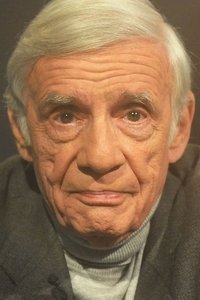
Jean Daniel

Jean Daniel

Self - Writer and Journalist

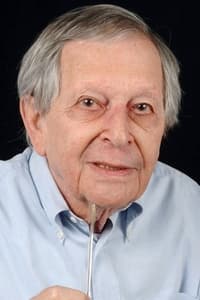
Robert Gallimard

Robert Gallimard

Self - Editor

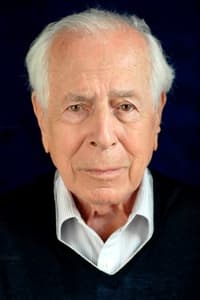
Roger Grenier

Roger Grenier

Self - Journalist

Hélène Rufat

Hélène Rufat

Self - Professor of Literature

Adolf Hitler

Adolf Hitler

Self (archive footage)

Albert Camus

Albert Camus

Self (archive footage)

Fernando Valera Aparicio

Fernando Valera Aparicio

Self - Writer (archive footage)

Francisco Franco

Francisco Franco

Self (archive footage)

José Ballester Gozalvo

José Ballester Gozalvo

Self - Journalist (archive footage)

María Casares

María Casares

Self (archive footage)

Similar Movies

7.0

The Moroccan Labyrinth

November 2007 •Spanish

8.3

Albert Camus, la tragédie du bonheur

March 1999 •French

8.0

Stronger Than a Bullet

November 2017 •English

Iran, January 16th, 1979. Shah Mohammad Reza Pahlavi flees after being overthrown. Ayatollah Khomeini returns to Tehran and proclaims the Islamic Republic on April 1st, 1979. In the same year, Saddam Hussein seizes power in Iraq and, after several border skirmishes, attacks Iran on September 22nd, 1980, initiating a cruel war that will last eight years. Since its outbreak, correspondent Saeid Sadeghi documented it from its beginning to its bitter end.

0.0

O resplandor das Atochas

January 2007 •Galician

The memory of a defeat, a barbarism: the destruction at the dawn of the civil war of people who fought for freedom, a group of anarchists from A Coruña located in the Atochas area. Through valuable witnesses and historical images a reconstruction of a metaphorical episode in the history of the country. This projection is made in collaboration with its author and the Commission for the Recovery of Historical Memory.

8.5

Maria Casarès and Albert Camus, you, my life

November 2022 •French

Maria Casarès, a theatre actress and Albert Camus, one of the most important modern french writer, keep a long correspondence (more than 900 letters) about their love and the emotions they feel for each other for 15 years.

0.0

Flophouse America

June 2025 •English

Because of the big housing problem in the US many people move into cheap, run down hotels, the so-called Flophouse hotels. Twelve-year-old Mikal was born and raised in a hotel room he shares with his parents, who struggle with substance abuse. Driven by love and a desire for a better life, his greatest wish is for his mother to stop drinking. Mikal is bright and articulate, but his parents’ struggles prevent them from giving him the stability he needs. Through Mikal’s perspective, the film paints an intimate portrait of resilience, hope, and the harsh realities of life on society’s margins.

6.8

Camus, l'icône de la révolte

January 2020 •French

Albert Camus, who died 60 years ago, continues to inspire defenders of freedom and human rights activists around the world today. The Nobel Prize winner for literature is one of the most widely read French-language writers in the world. He continues to embody the rebellious man who opposes all forms of oppression and tyranny while refusing to compromise his human values.

6.6

Spain

January 1939 •Russian

A feature-length documentary based on film reports from the Spanish civil war.

10.0

Guns of Freedom

January 1961 •Arabic

This docu-fiction recounts the difficulties overcome by an ALN ​​detachment whose perilous mission is to transport weapons and ammunition from Tunisia across the Algerian Sahara during the Algerian liberation war (1954-1962) against the French army of occupation.

6.8

CHoosing at Twenty

August 2017 •French

Between 1954-1962, one hundred to three hundred young French people refused to participate in the Algerian war. These rebels, soldiers or conscripts were non-violent or anti-colonialists. Some took refuge in Switzerland where Swiss citizens came to their aid, while in France they were condemned as traitors to the country. In 1962, a few months after Independence, Villi Hermann went to a region devastated by war near the Algerian-Moroccan border, to help rebuild a school. In 2016 he returned to Algeria and reunited with his former students. He also met French refractories, now living in France or Switzerland.

8.0

Two Lives for Algeria and All the Wretched of the Earth

January 2025 •French

In 1994, at over seventy years old, Gilberte and William Sportisse, threatened by the FIS, arrived from Algeria. Of Jewish faith, he of Arabic mother tongue, they formed a fighting couple, started for the independence of Algeria, always with an unshakeable faith in humanity. They enjoy recounting the participation of Algerian Jews in the Second World War and the struggle for Algerian independence. They provide us with previously unpublished information on the public and clandestine struggles of the Algerian Communist Party before and after independence, and on the repression of activists who, like William and Gilberte Sportisse, were tortured and imprisoned after Colonel Boumédiène came to power. The film is an ode to understanding between people of different origins or cultures and a tribute to a couple whose youthful character and enthusiasm still astonish.

6.0

The Ponzán Network

October 2022 •Spanish

During the Spanish Civil War (1936-1939) and the Second World War (1939-1945), around three thousand people managed to elude their pursuers, and probably also avoided being killed, thanks to the heroic and very efficient efforts of the Ponzán Team, a brave group of people — mountain guides, forgers, safe house keepers and many others —, led by Francisco Ponzán Vidal, who managed to save their lives, both on one side and the other of the border between Spain and France.

10.0

Zinedine Zidane: Zizou the Great

January 2009 •English

FIFA World Player in 1998, 2000, and 2003, Zidane has been labeled the greatest player to come out of France. Known for his brilliant ball control, incredible vision, precise passing and ability to read the game, Zidane has also dedicate much of his time to helping those less fortunate than himself.

10.0

How Much I Love You

May 1985 •Arabic

Beginning with a promotional reel encouraging farming investments in Algeria and ending with the secret 1950s nuclear tests that France conducted using Algerian prisoners, How Much I Love You appropriates archival footage produced by the French colonial powers in Algeria. Meddour’s approach is disarmingly simple and yet awe-inspiring—his caustic undoing of colonial discourse is underscored by a liberating release of humor.

3.0

¿Por qué morir en Madrid?

May 1966 •Spanish

6.0

Fallas 37: el arte en guerra

March 2013 •Spanish

In November 1936, a few months since the beginning of the Spanish Civil War, the government of the Second Republic moves to Valencia. In this situation, several Valencian artists and intellectuals decide to build four fallas — satirical plasterboard sculptures created to be burnt — to mock fascism.

7.6

Chernobyl 30 Years On: Nuclear Heritage

May 2015 •English

Thirty years after the Chernobyl disaster, which occurred on the night of April 26, 1986, its causes and consequences are examined. In addition, a report on efforts to strengthen the structures covering the core of the nuclear plant in order to better protect the population and the environment is offered.

8.5

Algeria in Flames

January 1958 •Arabic

These are the first images shot in the ALN maquis, camera in hand, at the end of 1956 and in 1957. These war images taken in the Aurès-Nementchas are intended to be the basis of a dialogue between French and Algerians for peace in Algeria, by demonstrating the existence of an armed organization close to the people. Three versions of Algeria in Flames are produced: French, German and Arabic. From the end of the editing, the film circulates without any cuts throughout the world, except in France where the first screening takes place in the occupied Sorbonne in 1968. Certain images of the film have circulated and are found in films, in particular Algerian films. Because of the excitement caused by this film, he was forced to go into hiding for 25 months. After the declaration of independence, he founded the first Algerian Audiovisual Center.

7.0

I Invite You to My Execution

October 2019 •French

As Russian writer Boris Pasternak (1890-1960) thinks it is impossible that his novel Doctor Zhivago is published in the Soviet Union, because it supposedly shows a critical view of the October Revolution, he decides to smuggle several copies of the manuscript out of the country. It is first published in 1957 in Italia and the author receives the Nobel Prize in Literature in 1958, which has consequences.

5.0

Francisco Boix: A Photographer in Hell

January 2000 •Spanish

In 1939, just finished the Spanish Civil War, Spanish republican photographer Francesc Boix escapes from Spain; but is captured by the Nazis in 1940 and imprisoned in the Mauthausen concentration camp, in Austria, a year later. There, he works as a prisoner in the SS Photographic Service, hiding, between 1943 and 1945, around 20,000 negatives that later will be presented as evidence during several trials conducted against Nazi war criminals after World War II.