
Movies

HomeMoviesSearchTV SeriesBookmarksView Source
Once Upon a Time in the Oued

Once Upon a Time in the Oued

Genres

Comedy

OverView

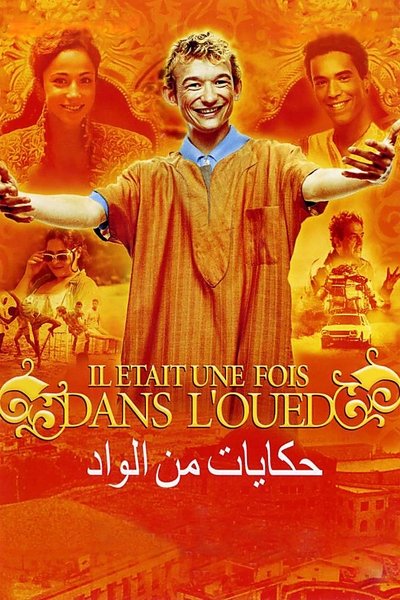
In 1988, Johnny Leclerc, the son of a Norman mother and an Alsatian father, lives in a suburban housing estate with his friends. He behaves like a Muslim, observes Ramadan and wears a djelaba. He's even convinced that his name is Abdelbachir and that he was born in a small village in the bled. When his friend Yacine gets into trouble with a local kaid and decides to return to Algeria for the vacations, he smuggles himself into the Sabri family's luggage to fulfill his dream and finally get to know his "roots". As soon as he arrived on the Algerian coast, Johnny felt right at home. But Yacine is opposed to his father, who wants to arrange his marriage.

Others

Budget

$--

Revenue

$--

Status

Released

Original Language

French

Runtime

93 mins

Rating

5.5/10

Release Date

19 October 2005

Country

France

Cast

Julien Courbey

Julien Courbey

Johnny Leclerc

Sid Ahmed Agoumi

Sid Ahmed Agoumi

Mohamed Sabri

David Saracino

David Saracino

Yacine Sabri

Karina Testa

Karina Testa

Nadia

Marilou Berry

Marilou Berry

Nadège

Amina Annabi

Amina Annabi

Relah Sabri

Olivier Baroux

Olivier Baroux

Le vacancier suisse

Éric Judor

Éric Judor

Les commerçants

Ramzy Bedia

Ramzy Bedia

Les commerçants

Aziz Degga

Aziz Degga

Un Tonton

Omar Sy

Omar Sy

le génie de la lampe

Salah Eddine Benmoussa

Salah Eddine Benmoussa

Le Hajj

Atmen Kelif

Atmen Kelif

Naber, un cousin du désert

Élie Semoun

Élie Semoun

Le maître d'hôtel

Frankie Pain

Frankie Pain

la mère de Johnny

Pierre Ménès

Pierre Ménès

patron de Yacine au marché

Max Morel

Max Morel

Le père de Johnny

Karim Belkhadra

Karim Belkhadra

Le parrain

Medi Kerouani

Medi Kerouani

Mehdi Sabri

Mustapha Slaoui

Mustapha Slaoui

L'oncle du désert

Jamal Lababsi

Jamal Lababsi

Le videur

Omar Yami

Omar Yami

Le Douanier

Tapa Sudana

Tapa Sudana

Vieux Chinois cité

Youssef Britel

Youssef Britel

Un cousin d'Oran

Abdelkader Lofti

Abdelkader Lofti

Le cheikh

Mohamed Tsouli

Mohamed Tsouli

David, l'homme à la kippa

Kamel Bouakkaz

Kamel Bouakkaz

Guichetier à la Poste d'Alger

Aïcha Mahmah

Aïcha Mahmah

Grand-mère d'Alger

AP du 113

AP du 113

Pote 4

Similar Movies

10.0

Elli Fat Mat

November 1989 •French

27 years after 1962, Antoine returns to Algiers...

5.7

The Harem of Madame Osmane

July 2000 •French

In Algiers in 1993, while the civil war is starting, Mrs Osmane's tenants have to endure her bad temper. Her husband left her and the fear to lose her respectability haunt her. The former member of the Resistance during the Independence War persists in controlling the slightest moves of the households rather than struggle against her own frustrations. Learning her daughter is in love, the possibility of finding herself alone will push her to the limit: The symbolical Mrs Osmane "harem" is about to collapse.

10.0

L'Obstacle

January 1965 •French

Algerian youth of the 1960s, straddling traditional South Mediterranean and Western culture and the desire for emancipation of younger generations to find true love.

10.0

Machaho

January 1995 •Arabic

In Kabylie, rude mountain region in the north of Algeria. Arezki finds the young Larbi exhausted, buried under the snow. He takes him in and nurses him until he's recovered. The host seduces Arezki's daughter. She is pregnant. This is an unsupportable shame to the father of the female sinner. Arezki claims vengeance. He leaves his house and takes the oath not to come back before having killed Larbi who betrayed him under his own roof.

10.0

Moussa's Wedding

January 1982 •Arabic

Moussa, a young Franco-Algerian, returns to Algeria, but adapting to life in his country of origin proves difficult. Just as he is about to leave for France, he is called up for military service, which suits him fine because he is secretly in love with the beautiful Nacira.

10.0

The Honour of the Tribe

January 1993 •French

Like every year in Zitouna, a bear handler passes by. With his creature, he comes to challenge the small community. And like every year, it is Slimane El Mabrouk who defends the honor of the tribe. But this time, he dies, leaving two orphans, Omar and Ourida. Robbed of their inheritance, the children will grow up alone. The years pass, the French army settles in, and with it, the war. Mysteriously, one day, after the murder of a French legionnaire, Omar disappears into the bush, while his sister dies in childbirth. Omar will return to the village, much later, once independence has been acquired, as a representative of power and with this enigmatic formula: "You must know that the Revolution has not forgotten you". Personal revenge? Sincere desire to bring progress and modernity? ... The inhabitants of Zitouna, upset in their ancestral way of life, will not be long in having an answer to their questions.

8.2

Tahia Ya Didou !

January 1971 •Arabic

Originally commissioned by the city of Algiers to promote tourism, Mohamed Zinet’s Tahia ya Didou blends documentary with fiction to create a poetic, acerbic and rapturous portrait of the director’s native city. The camera travels freely, through the port, market, streets and cafés, capturing everyday people, some of whom recur frequently enough to seem like protagonists. The nominal plotline follows a French tourist couple’s leisurely visit to the city, the man having previously served in the army during the Algerian war. As they walk around, his comments betray his mindset’s racist colonial prejudices, while his wife reiterates asinine clichés. Their unhurried wandering is interrupted when he comes across a blind man and realises that he tortured him during his army service. The film is punctuated with punchy sequences that show a poet named Momo delivering verse as an elegy for Algiers.

10.0

Take Your Ten Thousand Francs and Get Out

January 1981 •French

Two young Algerians born in France leave the Paris region to return with their parents to the village of their origins. They speak neither Arabic nor Berber. First barrier which isolates them from their new environment and which is further accentuated by the problem of generations, present here as in France. The social position of Algerian women posed to young emigrants is more immediately felt and proves to be a generator of conflict. Thanks to the plot, it is the whole problem of the reintegration of emigrants in their land of origin that the film poses and illustrates.

10.0

The Empire of Dreams

June 1982 •Arabic

A stubborn director who wants to rediscover the Algiers of his childhood comes up against the “Hollywood” fantasies of his characters, non-professionals all hoping to be able to become “someone else”, at least for the duration of a film… Mise en abyme for a journey into megalomania…

10.0

First Step

January 1980 •Arabic

A modern couple seeks to find marital happiness in a context where Algerian society is taking the “first step” towards female emancipation. A woman becomes president of a popular municipal assembly. Will she find happiness ?

10.0

Leila and the Others

January 1977 •Arabic

The story of Algerian women trying to live in 1970s Algeria where the society is between conservative values and progressive modern Algeria.

10.0

El Ghoula

January 1972 •Arabic

An adaptation of the satirical play of the same name by comedian Rouïched (Ahmed Ayad). "El-Ghoula" (The Vampire) tells the story of a corrupt official who lives off the peasants of an agricultural cooperative. Instead of solving problems, this official manipulates empty rhetoric and "revolutionary" slogans to galvanize them and encourage them to continue working. Opportunistic, he will transform the fellahs' work into chaotic bureaucratic procedures for his own personal gain.

8.6

Hassan Terro

January 1967 •Arabic

While he tries by all means to stay out of the bloody upheavals caused by the battle of Algiers, Hassan, an honest and naive father, unknowingly offers hospitality to a mujahid actively sought by the army. French. A series of events and misunderstandings quickly catapult him to the forefront, presenting him under the pseudonym “Hassan Terro”, a great fictitious terrorist who would have sworn the doom of the French army...

10.0

Hassan Niya

January 1989 •Arabic

The story of Hassan, the handyman in the inn of his sister Aïcha, widowed and childless. A whole series of incidents, misunderstandings, will punctuate his daily routine in which we find him in turn driver, waiter, welder, etc. But, he refuses to submit to anything that does not conform to the idea he has of society and things...

6.6

Mascarades

November 2008 •French

Mounir Mekbek lives with his family in a small village in the heart of the Algerian countryside. Very proud and sure of himself, he has only one dream- to finally be appreciated by his fellow villagers. Screwing up his carefully maintained image is his headstrong, narcoleptic sister Rym who falls asleep anywhere and whom the village is convinced will end up a spinster. One evening, Mounir returns from town drunk and announces that he's found a suitor for his sister. The fake story snowballs and snowballs until the suitor morphs into a rich, blonde Australian. The village begins preparing for the wedding in earnest - but without a bridegroom in sight.

10.0

El Ouelf Essaïb

January 1990 •Arabic

An Algerian music composer and his friends live a thrilling story, full of twists and turns.

10.0

Kahla wa Bayda

January 1980 •Arabic

Rabie is a kid from Sétif in 1980, trying to collect money to buy a wheelchair for his paralyzid sister Sassia, so she can get out of the house.

10.0

Hassan Terro au Maquis

January 1978 •Arabic

While trying by all means to stay out of the bloody turmoil caused by the Battle of Algiers, Hassan, an honest and naive family man, is wrongfully accused of terrorism by the French colonial army in "Hassan Terro." After escaping in "The Escape of Hassan Terro," Hassan is forced to join the resistance in "Hassan Terro in the Maquis."

10.0

Crazy About Music

March 1967 •French

Fous de Musique by Jean-Charles Carlus (1957) is a musical comedy featuring Rouiched, Mahieddine Bentir and the famous Bendaoud orchestra. Shot during the Algerian War, the film was not released until after independence and was probably shown in Paris in cinemas intended for immigrant workers around 1967. Sources: Archives Numériques du Cinéma Algérien

10.0

The Adventures of a Hero

January 1979 •Arabic

In one of the tribes of the Algerian Sahara, everyone awaits the arrival of the hero who will defend the rights of the poor. A man decides one day to put the mark of the "hero" on his newborn son and the whole tribe celebrates the arrival of this eagerly awaited messiah who came to save them. This false hero then grows up by assuming his role of savior. Filled with cynicism, he crosses the countryside and has a number of adventures.