Movies

HomeMoviesSearchTV SeriesBookmarksView Source
Sahara Blues
Sahara Blues

Sahara Blues

Genres

Drama

OverView

Mounya doesn't like the desert, and she doesn't like Majid either, but she agreed to go with him for the weekend to southern Algeria. Rabah Bouberras directs an intimate film which tells the story of a woman taking stock of her past and present during a trip to the south of Algeria with her son and her second husband.

Others

Budget

$--

Revenue

$--

Status

Released

Original Language

Arabic

Runtime

82 mins

Rating

10/10

Release Date

02 June 1991

Country

Algeria
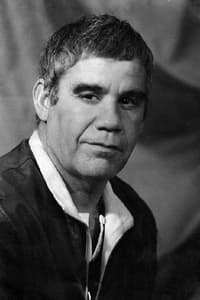
Cast

Sid Ali Kouiret

Sid Ali Kouiret

Madjid

Brahim Kaci

Brahim Kaci

Moumouh

Fatima Belhadj

Fatima Belhadj

Mina

Aziz Degga

Aziz Degga

Similar Movies

7.6

The Zerda or the Songs of Forgetting

February 1983 •French

“La Zerda and the songs of oblivion” (1982) is one of only two films made by the Algerian novelist Assia Djebar, with “La Nouba des femmes du mont Chenoua” (1977). Powerful poetic essay based on archives, in which Assia Djebar – in collaboration with the poet Malek Alloula and the composer Ahmed Essyad – deconstructs the French colonial propaganda of the Pathé-Gaumont newsreels from 1912 to 1942, to reveal the signs of revolt among the subjugated North African population. Through the reassembly of these propaganda images, Djebar recovers the history of the Zerda ceremonies, suggesting that the power and mysticism of this tradition were obliterated and erased by the predatory voyeurism of the colonial gaze. This very gaze is thus subverted and a hidden tradition of resistance and struggle is revealed, against any exoticizing and orientalist temptation.

10.0

The Unknown Hero

March 2016 •Arabic

In the midst of the Algerian war for independence, a group of fighters is trapped in the mountains, surrounded by the colonial army. Cut off from their allies, they have only one hope: to transmit a vital message to save their unit. But crossing enemy lines is a suicide mission. Their only chance lies with an unexpected messenger: a courageous dog named Messaoud. Carrying the letter attached to his collar, he embarks on a perilous crossing, braving the hostile nature and the dangers of war. But when he is captured by the enemy, his courage and instinct become his only weapons. Prisoner, hunted, he must risk everything to escape and accomplish his mission before it is too late. Sacrifice, bravery and hope mingle in this breathtaking odyssey where the humblest of heroes can change the course of history. The Unknown Hero, a moving film which won first prize at the Arab World Festival in 2017.

10.0

Elli Fat Mat

November 1989 •French

27 years after 1962, Antoine returns to Algiers...

10.0

Baya's Mountain

December 1997 •Arabic

Set in the 1800s among the Berbers of North Africa, this 1997 Algerian feature concerns a noble widow who receives a customary purse of gold coins from the enemy tribe that murdered her husband; the gift puts her in conflict with her kinsmen, who want the money to buy back land taken by the enemy in cahoots with French colonials.

8.5

The Forgotten Hill

May 1996 •Arabic

At the outbreak of the Second World War, two friends, Mokrane and Menach, abruptly interrupt their studies and return to their remote native Kabylian village of Tagsa. While waiting to be drafted into the French Army they have time to woo. Mokrane falls for beautiful Aazi and soon marries her only to find out that she can bear no child. Menach, on his part, is stongly attracted to Davda, but the latter is already married to a rich merchant...Happiness does not seem to be in store for the two former students...

10.0

Machaho

January 1995 •Arabic

In Kabylie, rude mountain region in the north of Algeria. Arezki finds the young Larbi exhausted, buried under the snow. He takes him in and nurses him until he's recovered. The host seduces Arezki's daughter. She is pregnant. This is an unsupportable shame to the father of the female sinner. Arezki claims vengeance. He leaves his house and takes the oath not to come back before having killed Larbi who betrayed him under his own roof.

7.9

The Battle of Algiers

September 1966 •Italian

Paratrooper commander Colonel Mathieu, a former French Resistance fighter during World War II, is sent to Algeria to reinforce efforts to squelch the uprisings of the Algerian War. There he faces Ali la Pointe, a former petty criminal who, as the leader of the Algerian Front de Liberation Nationale, directs terror strategies against the colonial French government occupation. As each side resorts to ever-increasing brutality, no violent act is too unthinkable.

10.0

Yasmina

January 1961 •Arabic

"Yasmina" filmed in 1961 in the middle of the Algerian war tells the story of a little Algerian girl with her hen and her family whose father was killed in a bombing by the French colonial army of occupation. The family, after a long journey, heads towards the refugee camps on the Tunisian border. Produced by the Cinema Service of the Provisional Government of the Algerian Republic (GPRA) in the midst of the war of independence, these films were intended to re-inform the population and international public opinion on the abuses committed by the French colonial army: torture, arrests and arbitrary executions, napalm bombings, fires in douars, entire villages wiped off the map, etc. which the French media described as a "pacification" campaign. The latter censoring or reorienting any images that could harm the colonial narrative.

10.0

The Charcoal Maker

January 1973 •Arabic

Film describes the miserable existence of a charcoal-burner who is barely able to feed his family. His search for work in town ends in failure and he is forced to return to his village.

5.7

The Harem of Madame Osmane

July 2000 •French

In Algiers in 1993, while the civil war is starting, Mrs Osmane's tenants have to endure her bad temper. Her husband left her and the fear to lose her respectability haunt her. The former member of the Resistance during the Independence War persists in controlling the slightest moves of the households rather than struggle against her own frustrations. Learning her daughter is in love, the possibility of finding herself alone will push her to the limit: The symbolical Mrs Osmane "harem" is about to collapse.

10.0

One Roof, One Family

February 1982 •Arabic

Selim Mechoubine, a young man of 28, is the eldest of a large family. In the cramped accommodation he shares with his parents, brothers and sisters... he occupies the kitchen, the refuge of his dreams and his many fantasies. Selim, the court clerk where divorcing couples parade..., wants to get married. His mother finds him “the rare pearl”. But now, the bride's family demands that the couple have their own home... Selim's misadventure begins; he finds himself confronted with the problems of the housing crisis which forces him to begin a long quest, procedures, requests to find the sine qua non condition for his marriage.

7.2

Pépé le Moko

January 1937 •French

Pépé le Moko, one of France's most wanted criminals, hides out in the Casbah section of Algiers. He knows police will be waiting for him if he tries to leave the city. When Pépé meets Gaby, a gorgeous woman from Paris who is lost in the Casbah, he falls for her.

10.0

Gerboise Bleue

February 2009 •French

"Gerboise bleue", the first French atomic test carried out on February 13, 1960 in the Algerian Sahara, is the starting point of France's nuclear power. These are powerful radioactive aerial shots carried out in areas belonging to the French army. Underground tests will follow, even after the independence of Algeria. From 1960 to 1978, 30,000 people were exposed in the Sahara. The French army was recognized recognized nine irradiations. No complaint against the army or the Atomic Energy Commission has resulted. Three requests for a commission of inquiry were rejected by the National Defense Commission. For the first time, the last survivors bear witness to their fight for the recognition of their illnesses, and revealed to themselves in what conditions the shootings took place. The director goes to the zero point of "Gerboise Bleue", forbidden access for 47 years by the Algerian authorities

6.7

The Desert Ark

January 1998 •Arabic

The Desert Ark (L'Arche du Desert), a variation on Romeo and Juliet set in the Algerian desert. A young couple must face inevitable conflict when their rival families discover their secret love. Taking refuge in a cave, they listen to the sounds of a senseless campaign of violence and murder, which is the culmination of the extremism that has long divided their two communities. Nominated for the Golden Leopard at the 1997 Locarno Film Festival.

9.0

Under The Ashes

January 1990 •Arabic

The Second World War. French authorities ban political parties and unions. In Algeria, the leaders of political and trade union organizations were arrested and interned in "surveillance" camps with more than 2,000 French and foreigners: communist activists, trade unionists, brigadists, Spanish republicans and other opponents of the Vichy regime. The Djenien Bourezg camp is one of these camps, located in southern Algeria and is one of the most formidable. An old activist for the Algerian national cause returns to the scene. He blows away the ashes that cover this part of history. And through it, we discover the hard fight of the camp inmates for respect and human dignity, under a fascist command.

7.0

Jamila, the Algerian

December 1958 •Arabic

Djamila, a young Algerian woman living with her brother Hadi and her uncle Mustafa in the Casbah district of Algiers under the French occupation of Algeria, sees the full extent of injustice, tyranny and cruelty on his compatriots by French soldiers. Jamila's nationalist spirit will be strengthened when French forces invade her university to arrest her classmate Amina who commits suicide by ingesting poison. Shortly after the prominent Algerian guerrilla leader Youssef takes refuge with her, she realizes that her uncle Mustafa is part of this network of anti-colonial rebel fighters. Her uncle linked her to the National Liberation Front (FLN). A series of events illustrate Jamila's participation in resistance operations against the occupier before she was finally captured and tortured. Finally, despite the efforts of her French lawyer, Jamila is sentenced to death...

7.3

Dark Night, October 17, 1961

June 2005 •French

Parisian authorities clash with the Front de Libération Nationale (FLN) in director Alain Tasma’s recounting of one of the darkest moments of the Algerian War of Independence. As the war wound to a close and violence persisted in the streets of Paris, the FLN and its supporters adopted the tactic of murdering French policemen in hopes of forcing a withdrawal. When French law enforcement retaliated by brutalizing Algerians and imposing a strict curfew, the FLN organizes a peaceful demonstration that drew over 11,000 supporters, resulting in an order from the Paris police chief to take brutal countermeasures. Told through the eyes of both French policemen as well as Algerian protestors, Tasma’s film attempts to get to the root of the tragedy by presenting both sides of the story.

8.5

The Law of My Country

July 2012 •French

Algeria. Benjamin, Kateb and Antoine are three teenagers from three religious backgrounds who never should have met. But they share the same passion for football and the same disregard for the disapproving looks which their unusual friendship draws.

10.0

The Empire of Dreams

June 1982 •Arabic

A stubborn director who wants to rediscover the Algiers of his childhood comes up against the “Hollywood” fantasies of his characters, non-professionals all hoping to be able to become “someone else”, at least for the duration of a film… Mise en abyme for a journey into megalomania…

10.0

The Desert Divers

January 1952 •Arabic

Les Plongeurs Du Désert, directed by Tahar Hannache in 1952, is considered the first entirely Algerian fiction film. It tells the story of the inhabitants of an oasis whose well has dried up. The village elder, Sheikh Messaoud, calls upon the renowned desert divers, artisans specializing in clearing sand- and silt-filled wells, to restore access to the vital water for the community. After their intervention, the water begins to flow again, bringing relief to the oasis and its inhabitants. The film depicts the contrast between the traditional techniques of the divers, embodied by Sheikh Ali and his son Mansour, and the arrival of modernity, represented by the machine that ultimately replaces their craft. This story symbolizes the marginalization of local knowledge in the face of technological progress and the social injustice of the colonial era.