Movies

HomeMoviesSearchTV SeriesBookmarksView Source
The Olive Tree
The Olive Tree

The Olive Tree

Genres

Documentary

OverView

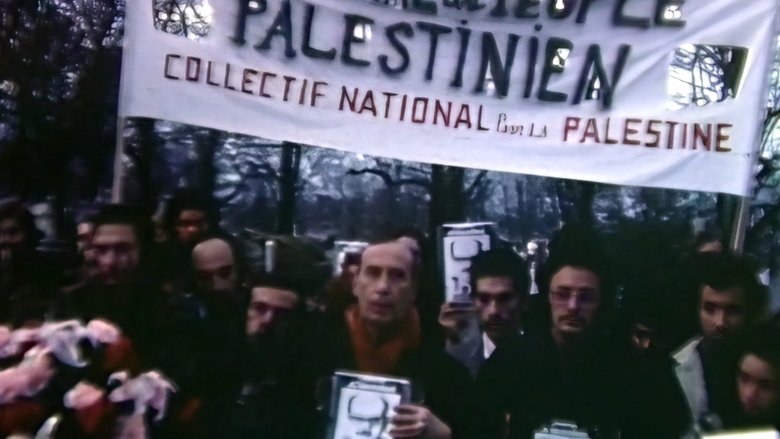
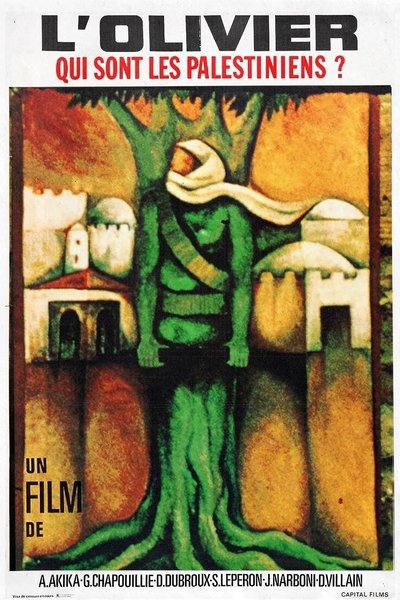
Filmed between 1973 and 1975, L’Olivier was produced by the Vincennes Cinema Group. This activist collective of teachers and filmmakers, formed on the occasion of this film, attempts to explain the Palestinian problem through interviews. The Olivier was one of the first films to attempt to give substance to what was still largely ignored in the West: the existence of the Palestinian people and their fight to recover their rights. L'Olivier responds to a concern: the already weak support of French public opinion for the Palestinian cause diminished following the Munich operation of 1972. Structured in such a way as to tell the Palestinian story and explain the state of the struggle at the time, the film appeals to global militant solidarity and, in particular, to European political commitments.

Others

Budget

$--

Revenue

$--

Status

Released

Original Language

French

Runtime

85 mins

Rating

10/10

Release Date

03 March 1976

Country

France

Cast

Similar Movies

0.0

No Traces of Life

March 2024 •English

Building on Forensic Architecture’s previous investigation into herbicidal warfare and its effects on Palestinian farmers along the eastern perimeter of the occupied Gaza Strip, this investigation marks Land Day in Palestine by examining the systematic targeting of orchards and greenhouses by Israeli forces since October 2023. Our analysis reveals that this destruction is a widespread and deliberate act of ecocide that has exacerbated the ongoing catastrophic famine in Gaza and is part of a wider pattern of deliberately depriving Palestinians of critical resources for survival.

0.0

The eloquence of blood

January 2005 •

Short film made from photographs taken by anthropologist and photojournalist Rogério Ferrari in Palestinian territories in 2002.

6.0

What Walaa Wants

February 2018 •English

Raised in a refugee camp in the West Bank while her mother was in prison, Walaa dreams of being a policewoman, wearing a uniform, avoiding marriage, and earning a salary. Despite discouragement from her family, Walaa applies - and gets in. But her own rebellious behavior and a complicated relationship with her mother are a challenge, as are the circumstances under which she lives. Following Walaa from 15 to 21, this first-ever look inside the Palestinian police academy brings us the story of a young woman navigating formidable obstacles, learning which rules to break and follow, and disproving the negative predictions from her surroundings and the world at large.

0.0

Detained

February 2001 •Hebrew

Najwa, Nawal, and Siham, three Palestinian widows, live with their 11 children in a house on Shuhada Street in Hebron. Their house lies on the border; the façade is under Israeli occupation, the Palestinian Authority controls the back. At the entrance to the house is a military post; on the roof the Israeli army has placed a watch point over Palestinian Hebron. The three women, trapped in the middle and constantly surrounded by Israeli soldiers, carry on their difficult lives in a perverse situation: the occupation becomes a routine, the absurd becomes a given. This is the story of an occupation that extends to the staircase and the roof of the house, where it encounters poverty, loneliness, pain, but also the small joys of everyday life. This is an internal prison, the external one is the ongoing occupation.

0.0

Six Thirty

April 2024 •Hebrew

A documentary film that brings testimonies taken just one week after the attack, from 7 different areas that were attacked in the events of Saturday, 10/7/23. The film is told from the point of view of the survivors. The evidence is unusually presented in the movie with the help of miniature models and animations that reinforce the hard evidence. The survivors share the survival experience they experienced during the long hours of the murderous terrorist attack. Those who ran away from the party, the houses they hid in, those who fought against the terrorists, and those who saved lives in the field. All with the choices they had to make in real-time, and saved their lives.

0.0

Los Que No Sienten

November 2019 •English

First-hand testimony of the situation that the majority of the inhabitants of Palestine live through, including Tamar, a young woman who fled from there to be able to tell her story and that of her country. The short film arises from the directors' inability to create a work about a story of a country they are unfamiliar with.

0.0

On the Objection Front

March 2005 •Hebrew

A film documenting the story of the Israeli refusnik-movement and interviews some of its protagonists. This timely documentary interweaves the stories of six soldiers who, after years of loyal reserve duty and annual active combat, find they can no longer countenance serving in the occupied territories of the West Bank and Gaza Strip. They become "refusniks" - an action that puts them at odds with deeply held national values and has devastating consequences in their own lives. In the film, six of the signers of the original "Combatants’ Letter" reveal the untenable combat experiences that led to their decision, the public outcry it provoked and the price they continue to pay for refusing to serve - including isolation, family ostracism and imprisonment. Winner, Ecumenical Jury Prize, Berlin Film Festival

6.2

Kafr Kassem

January 1974 •Arabic

On the eve of the Israeli attack on Egypt in 1956, Israel declares martial law in all the occupied Arab territories without any previous notice. When the villagers of Kafr Kassem returned home from the fields, they were butchered and killed in what is known today as the massacre of “Kafr Kassem”.

8.5

Objector

November 2019 •English

Like all Israeli youth, Atalya is obligated to become a soldier. Unlike most, she questions the practices of her country's military, and becomes determined to challenge this rite of passage. Despite her family's political disagreements and personal concerns, she refuses military duty and is imprisoned for her dissent. Her courage moves those around her to reconsider their own moral positions and personal power. OBJECTOR follows Atalya to prison and beyond, offering a unique window into the Israeli-Palestinian conflict from the perspective of a young woman who seeks truth and takes a stand for justice.

7.4

Control Room

January 2004 •Arabic

A chronicle which provides a rare window into the international perception of the Iraq War, courtesy of Al Jazeera, the Arab world's most popular news outlet. Roundly criticized by Cabinet members and Pentagon officials for reporting with a pro-Iraqi bias, and strongly condemned for frequently airing civilian causalities as well as footage of American POWs, the station has revealed (and continues to show the world) everything about the Iraq War that the Bush administration did not want it to see.

0.0

Wild Plants of Palestine

April 2018 •English

The film follows journeys of observational tours solicited by the Palestinian Museum and conducted by two professors from Birzeit University to collect photos of and information on the Palestinian Flora. The title is adapted from a collection of 123 images (circa 1900 to 1920) of wild flowers in Palestine found in the Matson Collection in the Library of Congress. Despite the tendency to trace the wild plants, the text in general aims at questioning the territorial extension of what is meant by the term “Palestinian”, while standing on insignificant topographical features of the (postcolonial) landscape in West Bank. Furthermore, it addresses photography as a practice and a tool of distributing and restricting information at once.

0.0

Closeness to the Land

May 2022 •English

In 2020, just as the pandemic was beginning, Gazala purchased land in western Ohio, on which sits a disused school building. This site allowed her to explore her complex relationship with “the land.” As the daughter of displaced indigenous Palestinians, she attempts to form a proxy bond with the earth, on ground that was stolen from the displaced indigenous Shawnee people. Closeness to the Land is video footage of hand-painted text signs that translate the word الأرض (ard) into six English words, displayed performatively in multiple locations to capture the now-invisible nature of indigenous culture in Ohio. These signs were installed on the old schoolhouse in early 2021.

0.0

Palestine: Story of a Land

January 1993 •French

Using only rare archival and newsreel footage, this film tells the story of Palestine from the nineteenth century through current times.

0.0

Relentless: Struggle for Peace in the Middle East

April 2003 •English

Relentless: The Struggle for Peace in the Middle East was produced by the pro-Israel media watchdog group HonestReporting [sic]. The concentrates on the causes of the Second Intifada through an examination of compliance the Oslo Accords, by Israel and the Palestinian Authority. It pays particular attention to the failure of the Palestinian Authority to "educate for peace". The documentary shows interviews with Itamar Marcus, director of Palestinian Media Watch, S. El-Herfi, Raanan Gissin, Caroline Glick, John Loftus, Sherri Mandel, Yariv Oppenheim, Daniel Pipes, Tashbih Sayyed and Natan Sharansky.

0.0

Guy Hircefeld: A Guy with a Camera

September 2018 •English

Guy Hircefeld, a veteran who served in the Israeli military at the start of its occupation of Palestine in the 1980s, now fights against the Israeli occupation. His only weapon is a camera.

7.0

An Oppressed People Is Always Right

May 1976 •Danish

In May 1974, the Israeli Air Force carried out an extermination operation against the Palestinian refugee camp Nabatiyeh. With this as a starting point, it is reviewed how the last 50 years of Zionist colonization of Palestine have partly led to the establishment of the state of Israel, partly to the expulsion of a people, the Palestinians, from their land. The film shows scenes of daily life in Palestinian refugee camps. We hear various of the inhabitants talk about their desire to return to their country, and we follow how the resistance movement works to free women from their traditional backward role. At the same time, the emergence of the armed resistance struggle is analysed, and the significance of the latest military technological developments for guerilla wars in the 3rd world is explained.

0.0

Gaza Is Our Home

January 2024 •English

"Gaza Is Our Home" is a profoundly personal documentary that peels back the layers of devastation within the Gaza Strip, as witnessed through the lens of filmmaker Monear Shaer. His debut documentary was created out of agony as a timely, impactful, and tragic response to the collective anguish of all who call Gaza home... What began as an auto-generated slideshow on Monear’s iPhone of his own trip to see his family in 2021, has since transformed into a feature-length documentary. Through a tapestry of intimate interviews, unfiltered personal footage, and raw storytelling, "Gaza Is Our Home" transcends the political rhetoric and confronts audiences with the agonizing reality and ongoing cruelty thrust upon the film-makers own family. It is more than just a documentary... Rather, "Gaza Is Our Home" stands as a testament to the humanity behind the over 33,362 innocent lives massacred since Oct 2023...

7.5

Occupation 101: Voices of the Silenced Majority

March 2006 •English

A thought-provoking documentary on the current and historical causes of the Israeli-Palestinian conflict and U.S. political involvement.

0.0

Mahdi Amel in Gaza: On the Colonial Mode of Production

February 2024 •English

Assassinated Lebanese intellectual Mahdi Amel — often dubbed “the Arab Gramsci” — famously said: “He who resists is never defeated.” What use is his thought to us today, and what is our responsibility as image makers to Gaza?

10.0

La Bataille d'Alger, l'empreinte

January 2018 •French

Cheikh Djemaï looks back on the genesis of Gillo Pontecorvo’s feature film, The Battle of Algiers (1965). Through archive images, extracts from the film and interviews with personalities, the filmmaker retraces the journey of a major work - from the events of the Algiers Casbah (1956-1957) to the presentation of the Lion of 'Or causing the anger of the French delegation in Venice - which left its mark as much in the history of cinema as in that of Algeria.